
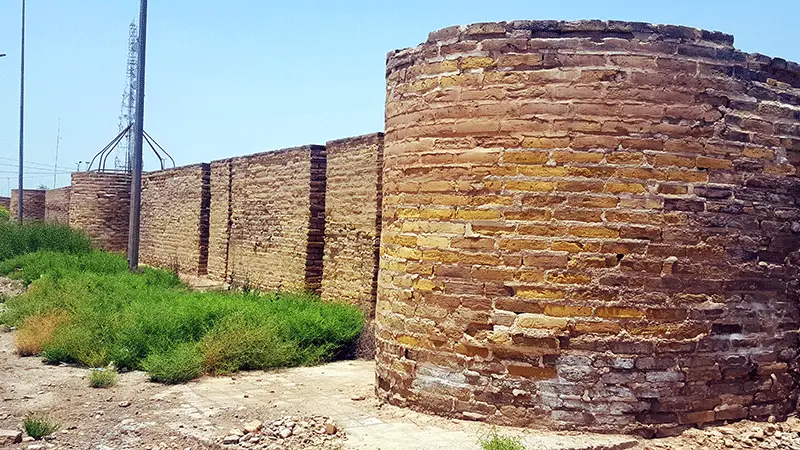
El Imara Palace
The Governor's Palace (Dar Al Imara) is considered one of the important archaeological landmarks in the city of Najaf Al Ashraf. It was the first building Muslims laid out in Kufa after their conquest of Iraq in 17 AH/638 CE, and witnessed many historical events as princes and governors succeeded one another in administering it.
In the year 17 AH, after his return from the conquest of Al Mada'in, Sa'd ibn Abi Waqqas ordered Abu Al Hayja Al Asadi to plan Kufa, and he planned it, laid out the Grand Mosque, and built a palace for Sa'd facing the mosque, constructing it and placing the treasury within it and residing in its vicinity.
It was located near the Mosque of Kufa, separated from it only by an alley that was removed by order of Umar ibn Al Khattab after the treasury was robbed. Excavations revealed a door in the qibla wall connecting the mosque and the palace, which was renovated by Governor Ziyad ibn Abihi when he rebuilt the mosque. The walls of the Governor's Palace reached approximately seventeen meters in height, and between it and the mosque was a secret passage leading to a door opening onto a platform above the mosque's prayer niche.
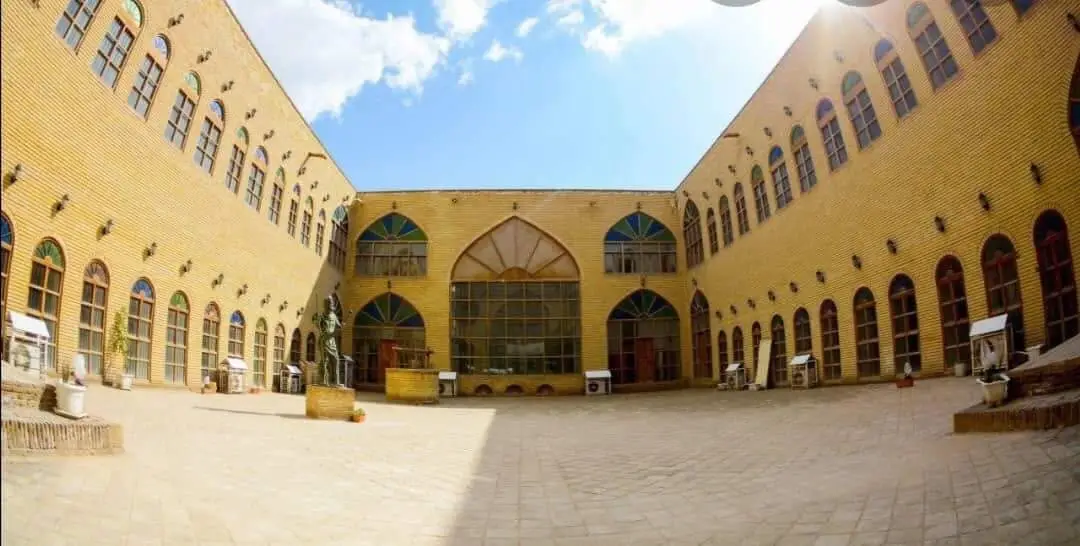
The palace consists of multiple building units, each with a wide courtyard, surrounded by two massive square walls, one within the other. The outer wall has sides approximately 170 meters long, built with brick and plaster, about 4 meters thick and approximately 20 meters high, supported by six semicircular towers on each side. The inner wall is square with sides approximately 110 meters long, supported by semicircular towers. Both were built with specially manufactured high-quality brick of uniform and integrated size, confirming the precision of the architectural planning that adopted a consistent and solid design combining administrative requirements with defensive strength.
The palace was witness to momentous historical events, it is the same palace that Al Mukhtar Al Thaqafi made headquarters for his government when he declared his revolution against the killers of Imam Hussein, and within it the heads of his killers were brought. Ubaydullah ibn Marwan ordered the destruction of the palace in 71 AH.
The palace was later subjected to deliberate demolition and its features disappeared, attributed mainly to some people removing its bricks to build their own homes, in addition to natural factors and humidity. Today the Antiquities Department of Najaf Governorate is conducting repairs to this site for rehabilitation, including maintenance of the western and southern walls and elimination of groundwater that had nearly erased some of its traces. It is considered one of the most prominent archaeological sites attracting visitors' attention for its ancient history and what it represents of a distinguished era in Arab and Islamic history.
The First Thing Muslims Built in Kufa
3 Min · Arabic · English · Persian · Kurdish (Kurmanji)
Frequently asked questions
What are the opening hours of El Imara Palace ?
El Imara Palace is open 24 hours.
How much does it cost to visit El Imara Palace ?
Admission to El Imara Palace is free.
How long should I spend at El Imara Palace ?
Plan about ~ 1 Hour for El Imara Palace .
When is the best time to visit El Imara Palace ?
Cooler months and daytime hours; mornings are quietest.
Does El Imara Palace have an audio guide?
Yes — a narrated audio guide for El Imara Palace is available in the Travel Tale app.
Where is El Imara Palace located?
El Imara Palace is in Najaf: Near Kufa Mosque, Kufa, Najaf.
Hear the full audio story — free in the app
Get app