
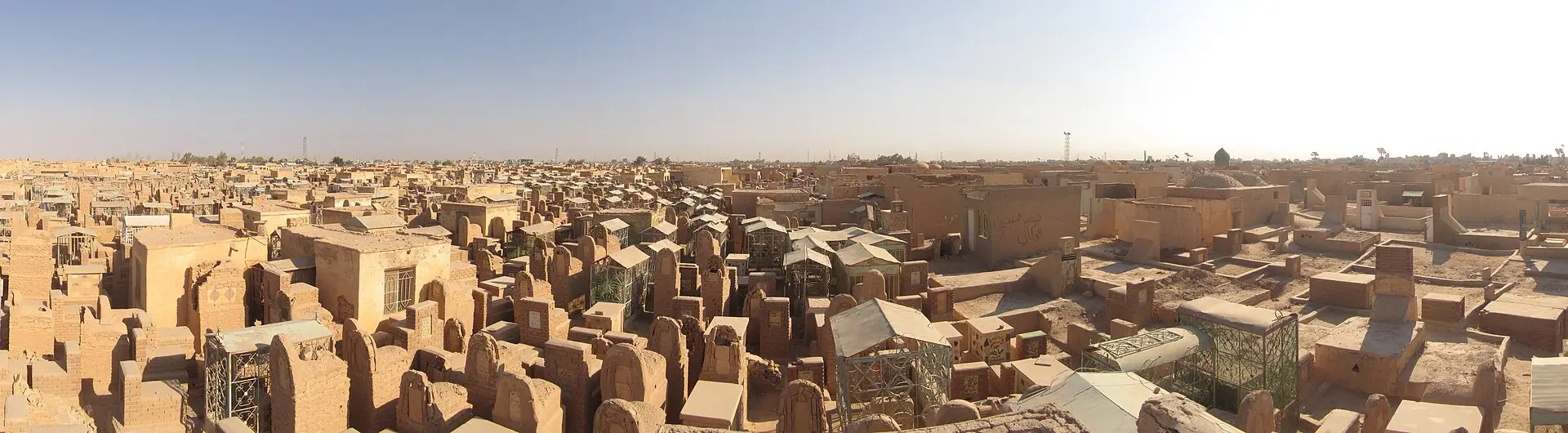
Wadi Al Salam Cemetery
Wadi Al Salam Cemetery is one of the most important cemeteries for Shia Muslims, located in the city of Najaf Al Ashraf.
It is considered the largest cemetery in the world, containing an estimated approximately six million graves. It has been inscribed on the World Heritage List, covers an area of about 6.01 square kilometers, and attracts millions of visitors annually.
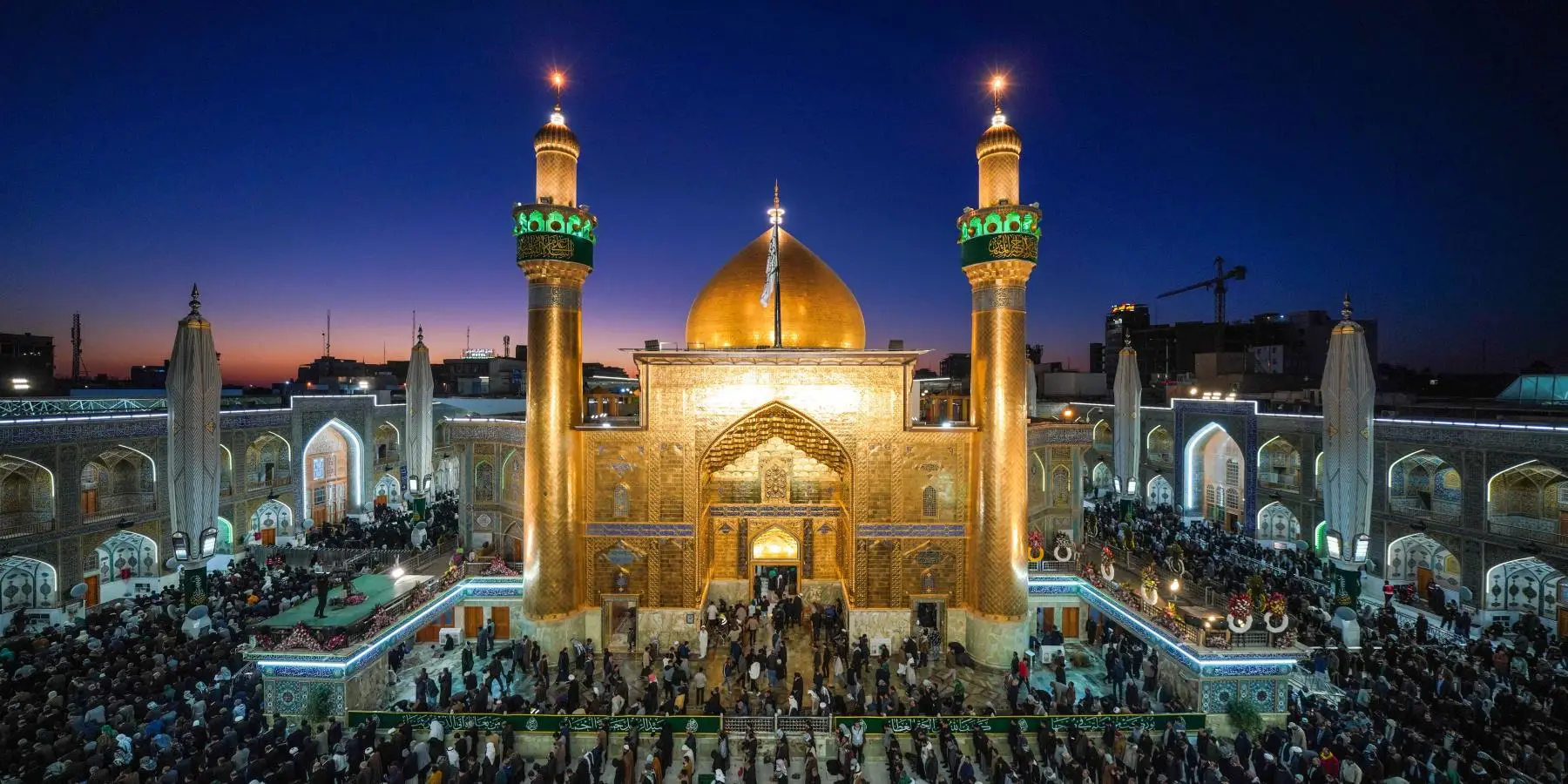
The cemetery is located near the shrine attributed to Ali ibn Abi Talib, bordered to the south by his noble shrine and the street known as Ali ibn Abi Talib Street, to the east by the Najaf road extending toward Karbala, to the north by the Engineers' neighborhood, and ending to the west at the ancient Najaf Sea.
Some sources indicate that the name traces back to the Prophet himself — or even the angel Gabriel — naming this spot, meaning that whoever is buried here is saved from the torment and reckoning of the intermediate realm (Barzakh). Sheikh Al Kulayni transmitted from Habba Al Arani from the Commander of the Faithful a narration in which the name "Wadi Al Salam" (Valley of Peace) appears as the name of this cemetery.
Historian Hassan Issa Al Hakim notes that the cemetery was established after the burial of Imam Ali ibn Abi Talib in Najaf, indicating that people previously buried their dead in a cemetery called Al Thawiyya. When Imam Ali was buried, people refrained from Al Thawiyya and began burying near him.
Wadi Al Salam Cemetery is distinguished by containing the remains of millions of Muslims, dozens of scholars and saints, and the graves of the kings of Al Hira. It has been said to contain the graves of some prophets, such as the Prophet of God Salih and Hud.
It also contains many types of graves, low graves and elevated graves like towers, family cemeteries within private rooms, and remains of the deceased in underground chambers reached by staircases.
Between 200 and 250 bodies are buried there daily, and it cannot be fully surveyed due to its vast area, extending from the region near Imam Ali's shrine to the south all the way to large areas to the north toward Karbala Governorate.
Over the years, Wadi Al Salam Cemetery has come to narrate all the tragedies that have passed through Iraq, beginning with the war with Iran between 1980 and 1988, through the American attack, sectarian wars, the atrocities of the Islamic State organization, and victims of the Covid pandemic.
Many people coming from various Iraqi cities and from around the world bring their dead to be buried near the shrine of Ali ibn Abi Talib in Najaf. Families even spend thousands of dollars to transport the funerals of their loved ones from America and European countries and various parts of the world to be buried in Wadi Al Salam, in the belief that whoever is buried in this earth will have the torment of the grave lightened.
The Valley of Peace
4 Min · Arabic · English · Persian · Kurdish (Kurmanji)
Frequently asked questions
What are the opening hours of Wadi Al Salam Cemetery?
Wadi Al Salam Cemetery is open 24 hours.
How much does it cost to visit Wadi Al Salam Cemetery?
Admission to Wadi Al Salam Cemetery is free.
How long should I spend at Wadi Al Salam Cemetery?
Plan about ~ 40 min for Wadi Al Salam Cemetery.
When is the best time to visit Wadi Al Salam Cemetery?
Cooler months and daytime hours.
Does Wadi Al Salam Cemetery have an audio guide?
Yes — a narrated audio guide for Wadi Al Salam Cemetery is available in the Travel Tale app.
Where is Wadi Al Salam Cemetery located?
Wadi Al Salam Cemetery is in Najaf: Wadi Al Salam Cemetery, Near Najaf Sea, Najaf.
Hear the full audio story — free in the app
Get app