
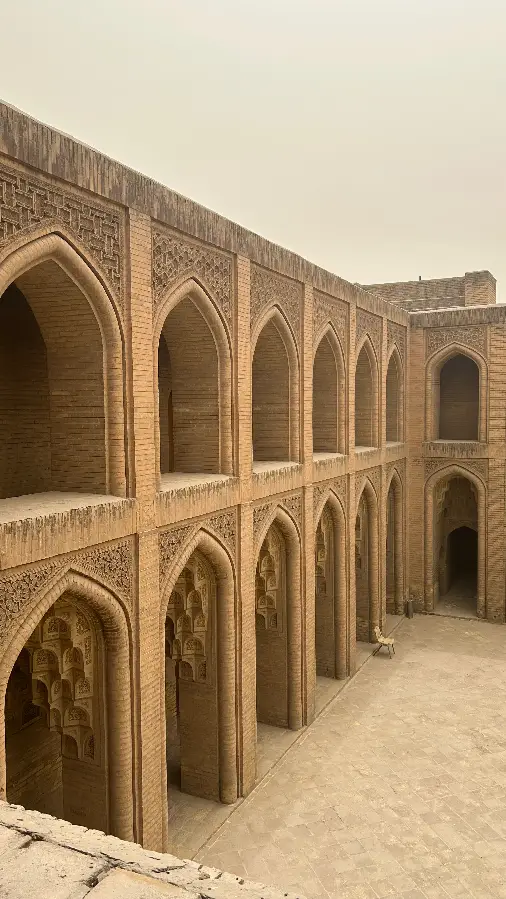
Abbasid Palace
The Abbasid Palace is believed to have been built in the late Abbasid era, with its construction attributed to the Abbasid Caliph Al-Nasir li-Din Allah (who reigned from 1180 to 1225 AD). Its construction likely took place between 1179 and 1225 AD.
Despite its name "palace," it's thought that its primary function was a madrasa (school) or a cultural and scientific center, where scholars and intellectuals would gather to exchange ideas. Some sources also suggest it was part of the old Baghdad Citadel and an administrative hub.
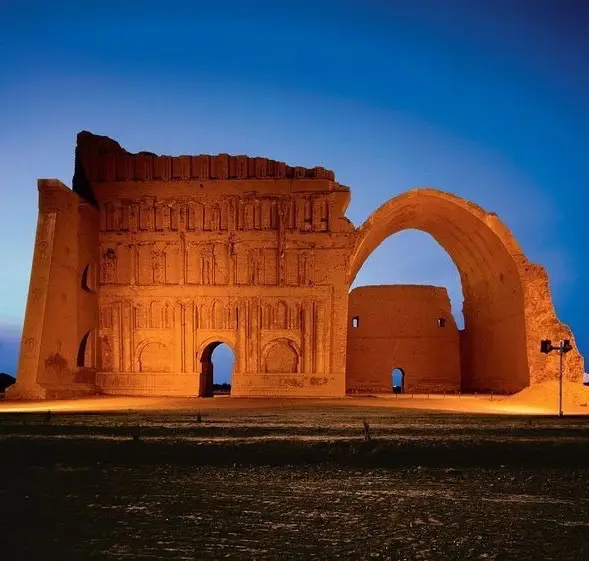
The palace was constructed entirely from brick and wood, a hallmark of Abbasid architecture. It features a unique design that showcases diverse and authentic geometric and floral patterns characteristic of Islamic architecture.
The Abbasid Palace stands as a testament to the grandeur of the Abbasid Caliphate and its cultural and scientific role. It reflects Baghdad's Golden Age, when it was a global civilized center for sciences, arts, and philosophy.
The School that Speaks of Baghdad’s Greatness
2 Min · Arabic · English
Frequently asked questions
What are the opening hours of Abbasid Palace?
Open until 16:00
How much does it cost to visit Abbasid Palace?
Admission to Abbasid Palace is free.
How long should I spend at Abbasid Palace?
Plan about ~ 1 Hour for Abbasid Palace.
When is the best time to visit Abbasid Palace?
Mid-morning to early afternoon, ideally on a weekday for fewer crowds. Photogenic in early evening light.
Does Abbasid Palace have an audio guide?
Yes — a narrated audio guide for Abbasid Palace is available in the Travel Tale app.
Where is Abbasid Palace located?
Abbasid Palace is in Baghdad.

Hear the full audio story — free in the app
Get app