
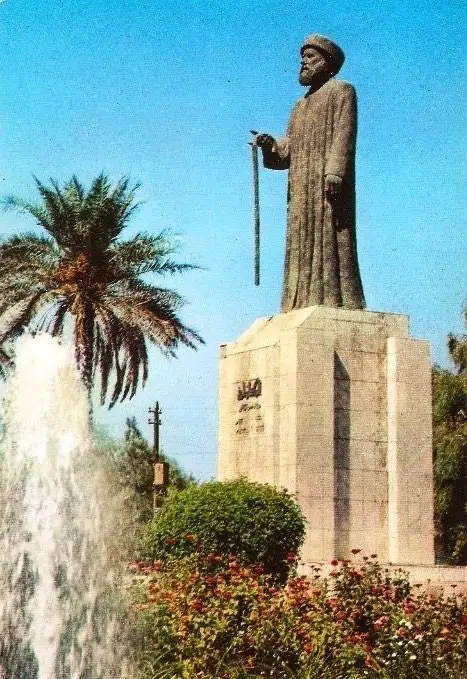
Abd Al Muhsin Al Kadhimi Statue
Abdul Mohsin Al Kadhimi was born on April 20, 1871 (30 Muharram 1288 AH) in the district of Al Kadhimiya in Baghdad, to which he is attributed. He came from a family engaged in the trade of sheepskins. Although his father attempted to involve him in agriculture and commerce, his literary inclinations emerged early in life. He pursued knowledge and culture, learned reading and writing, then immersed himself in the world of Arabic literature, memorizing vast amounts of poetry and language, eventually becoming a sensitive and refined poet in his youth.
In his early intellectual journey, Al Kadhimi met the renowned reformist thinker Jamal Al Din Al Afghani during the latter’s passage through Iraq. This meeting left a lasting impact on his literary and political orientation. Due to his stances, Al Kadhimi was harassed by the Ottoman authorities under Sultan Abdul Hamid II, which forced him to flee Iraq. He roamed between Iran, Iraqi tribes, the Gulf Emirates, and India, until he finally arrived in Egypt in late 1316 AH, initially intending to continue on to Europe.
However, Egypt became a turning point in his life. He was warmly received and intellectually embraced by Sheikh Muhammad Abduh, settling there with his wife Aisha, daughter of the Tunisian freedom fighter Mahmoud Ahmed Al Hussein. Al Kadhimi soon became one of the most prominent poets of both Iraq and Egypt in that era.
He was distinguished by his overflowing creativity, quick wit, and eloquence, often improvising poems on various occasions, with some reaching fifty to a hundred verses. He earned the titles “Abu Al Makarim” and “Poet of the Arabs”, and is regarded as one of the master poets of the modern Arab world. Al Kadhimi played a leading role in the literary movements of both Egypt and Iraq. His poetry was first published in 1912, and after his death, his daughter Rabab Al Kadhimi compiled his works into two volumes.
Although much of his poetry was lost due to his constant travels and harsh living conditions, his presence in literary gatherings remained strong, and he was admired by critics and writers alike for his ability to revive classical forms in a modern poetic voice.
After the death of his mentor Muhammad Abduh in 1323 AH, Al Kadhimi lived a difficult life filled with poverty and hardship until he passed away on May 1, 1935, in Heliopolis, Cairo, and was buried in the Imam Al Shafi’i cemetery.
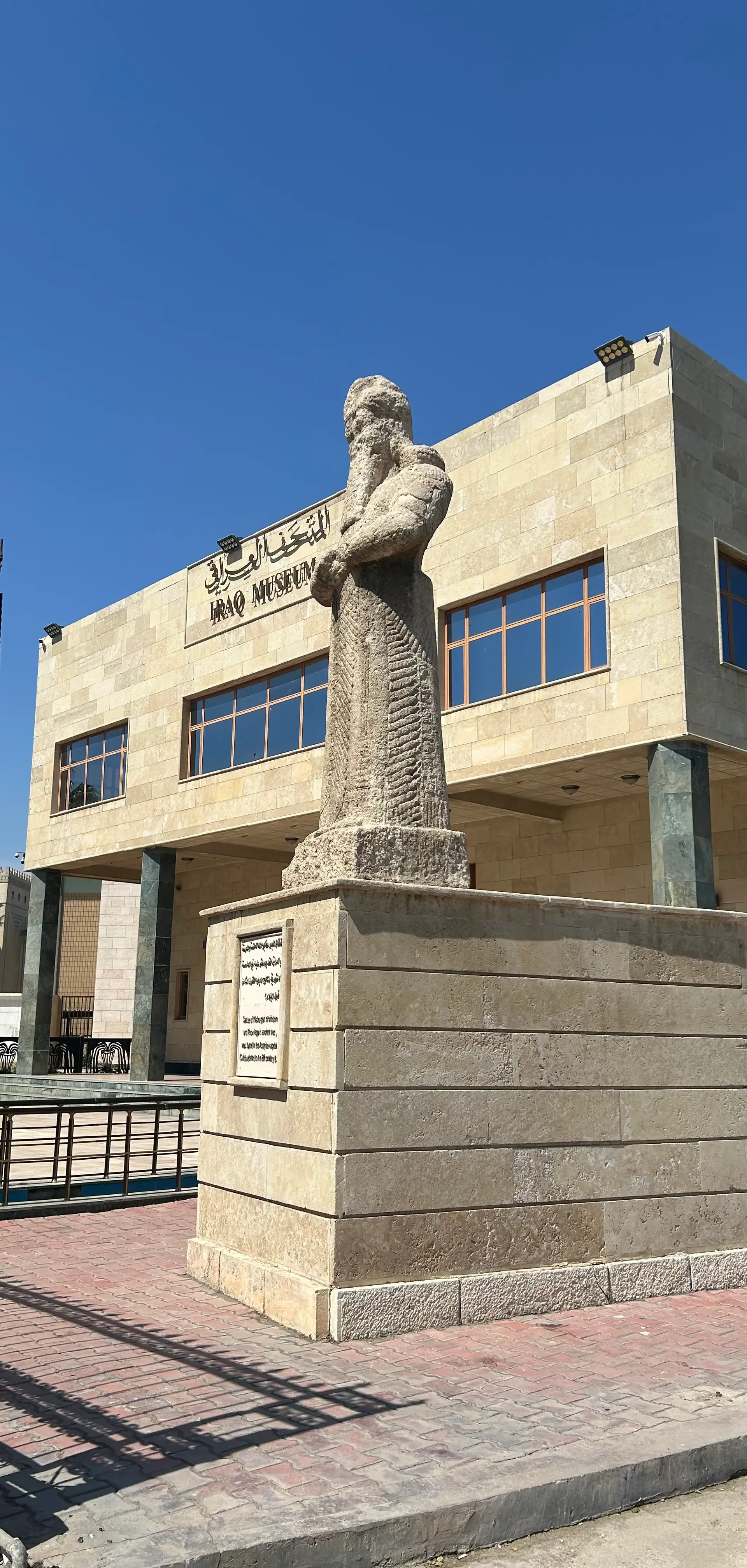
To honor his legacy, the Iraqi government erected a statue of him in a central square in Al Kadhimiya, which was named after him. The statue shows him standing tall, holding his traditional cane. It was sculpted by the renowned Iraqi artist Ismail Fattah Al Turk, and the monument has since become a cultural and civic landmark, reminding future generations of one of Iraq’s most significant poets of the modern era.
Today, Abdul Mohsin Al Kazemi remains a prominent figure in Arab poetic memory. His verses are read in schools and literary forums and continue to inspire modern Arabic literature. He is remembered as a symbol of elevated expression and a free spirit.
When Poetry Becomes a Statue
3 Min · Arabic · English
Frequently asked questions
What are the opening hours of Abd Al Muhsin Al Kadhimi Statue?
Abd Al Muhsin Al Kadhimi Statue is open 24 hours.
How much does it cost to visit Abd Al Muhsin Al Kadhimi Statue?
Admission to Abd Al Muhsin Al Kadhimi Statue is free.
How long should I spend at Abd Al Muhsin Al Kadhimi Statue?
Plan about ~ 20 min for Abd Al Muhsin Al Kadhimi Statue.
When is the best time to visit Abd Al Muhsin Al Kadhimi Statue?
Mid-morning to early afternoon, ideally on a weekday for fewer crowds. Photogenic in early evening light.
Does Abd Al Muhsin Al Kadhimi Statue have an audio guide?
Yes — a narrated audio guide for Abd Al Muhsin Al Kadhimi Statue is available in the Travel Tale app.
Where is Abd Al Muhsin Al Kadhimi Statue located?
Abd Al Muhsin Al Kadhimi Statue is in Baghdad.

Hear the full audio story — free in the app
Get app