
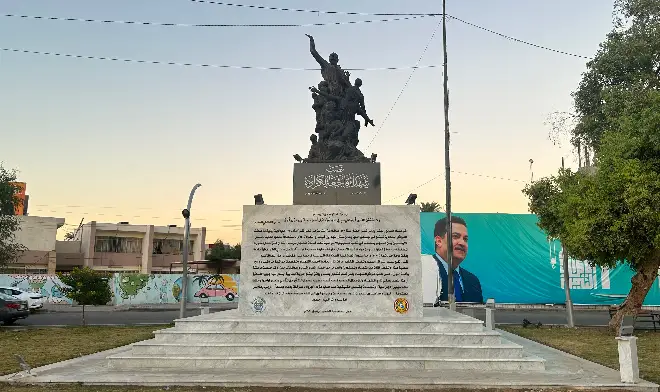
Martyrs of the Karada Tragedy Monument
This memorial was established to honor the memory of the victims of the heartbreaking Karrada bombing. It was initiated by the Martyrs Foundation, headed by Dr. Abdul Ilah Al Naeli, in cooperation with the Baghdad Municipality, represented by Mayor Engineer Ammar Musa. The municipality allocated the land, constructed the monument’s base, and landscaped its surroundings. Behind this monumental effort stood many dedicated individuals who worked tirelessly to present it in a way worthy of those who perished in the tragedy.
The explosion occurred at the end of Ramadan, during suhoor (the pre-dawn meal), when people were gathered near a restaurant in the eastern Karrada district. A car bomb detonated, igniting a massive fire and engulfing nearby commercial buildings. The attack claimed the lives and bodies of over 500 people, both martyrs and wounded.
ISIS claimed responsibility for the suicide bombing in an online statement circulated by its supporters. The attack was carried out using a transport vehicle loaded with explosive and incendiary materials.
The horrifying scale of the attack sparked overwhelming outrage and sorrow across Iraq. The people of Baghdad were stunned by the sheer magnitude of the blast and the intense, fuel-enhanced flames that tore through shopping centers and narrow streets. The fire exposed the unspeakable brutality of the crime. It was later considered one of the most devastating suicide attacks in Iraq since the 2003 invasion.
The explosion ignited an unprecedented inferno most victims died from asphyxiation or being burned alive. The fire rapidly consumed shopping arcades and stores, taking with it the lives of dozens of civilians, including women and children. More than 150 bodies were charred beyond recognition, forcing families to turn to DNA testing to retrieve and identify their loved ones.
Initial government investigations were vague and inconclusive, leaving families in a state of heartbreak, confusion, and unanswered questions.
The bombing site became a place of collective mourning and fury. When then Prime Minister Haider Al Abadi visited the site, he was met with a wave of public anger grieving relatives hurled shoes and stones at his convoy, expressing their frustration with the government’s failure to protect its citizens. In response, Al Abadi declared three days of national mourning.
On October 18, 2021, Prime Minister Mustafa Al Kadhimi announced the capture of Ghazwan Al Zuba’i, the main suspect in the bombing. On May 31, 2022, the Rusafa Criminal Court sentenced the convicted perpetrators to death by hanging.
Just days before Eid Al Fitr, Iraqi families had ventured out to buy new clothes for the celebration a beloved tradition in every Muslim household. But Eid never came that year. ISIS extinguished the joy of Eid for the entire nation.
There was no Eid for anyone.
Homes were lit with candles, not for celebration but for mourning.
People wept blood for their lost ones.
And to this day, the wound remains open in the hearts of the Iraqi people.
The Eid That Never Came
3 Min · Arabic · English
Frequently asked questions
What are the opening hours of Martyrs of the Karada Tragedy Monument?
Martyrs of the Karada Tragedy Monument is open 24 hours.
How much does it cost to visit Martyrs of the Karada Tragedy Monument?
Admission to Martyrs of the Karada Tragedy Monument is free.
How long should I spend at Martyrs of the Karada Tragedy Monument?
Plan about ~ 30 min for Martyrs of the Karada Tragedy Monument.
When is the best time to visit Martyrs of the Karada Tragedy Monument?
Mid-morning or late afternoon — softer light and lighter foot traffic.
Does Martyrs of the Karada Tragedy Monument have an audio guide?
Yes — a narrated audio guide for Martyrs of the Karada Tragedy Monument is available in the Travel Tale app.
Where is Martyrs of the Karada Tragedy Monument located?
Martyrs of the Karada Tragedy Monument is in Baghdad.

Hear the full audio story — free in the app
Get app