
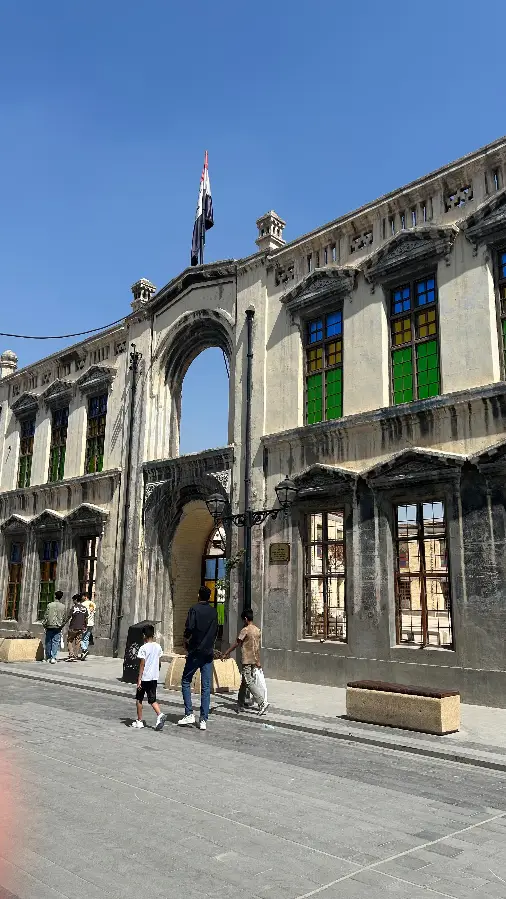
The Mutasarrifiyya of Baghdad Liwa
The building of the Mutasarrifiyya of Baghdad Liwa is located in the Jdid Hasan Pasha district on Al Saray Street, opposite the Al Qishla building on the Rusafa side of Baghdad.
It is considered one of the oldest administrative buildings still standing in the heart of the capital, and it is tied to an important chapter in the history of both Ottoman and modern Iraqi administration.
The mutasarrifiyya represented a second-level administrative division in the Ottoman Empire. An Ottoman wilaya(province) was divided into several mutasarrifiyyas also called sanjak or liwa each headed by an administrative official known as the mutasarrif, appointed by decree of the sultan.
The mutasarrifiyya itself was divided into qadhas (districts), which were further divided into nahiyahs (subdistricts).
A mutasarrifiyya could be subordinate to a larger wilaya, or independent in some cases.
The establishment of the Baghdad Liwa Mutasarrifiyya building dates back to the late nineteenth century, when the institution took as its headquarters the Royal Rashidiyah School, founded on 21 November 1869 and built by the governor of Baghdad, Midhat Pasha.
Abd Al Majid Al Shawi was the first to hold the position of mutasarrif of Baghdad Liwa in 1919.
Several notable figures later held the position and played important roles in shaping the history of modern Iraq, including:
* Rashid Al Khuja (1920): He played a prominent role in paving the way for Faisal bin al-Hussein to assume the throne of Iraq. He also supported educational and humanitarian development in Baghdad and contributed to the nationalist movement opposing the British Mandate.
* Fouad Al Daftari: He worked on completing public service projects such as street lighting and paving, and was a member of the committee that urged the Prime Minister to expedite the publication of the constitution.
The establishment of the Baghdad Liwa Mutasarrifiyya was an important milestone in solidifying modern Iraqi administration and contributed to organizing the city’s political and administrative affairs during a critical period of its history.
The building was rebuilt and renovated in 1934, adopting the English Victorian architectural style that characterized several government buildings in Baghdad during that era.
The building was later damaged by fire and partially demolished during the 2003 invasion of Iraq. Nevertheless, a large portion of its structure remained standing. Throughout its history, it housed several government departments, the last of which was the Baghdad Governorate Office in 1985.
Today, the Mutasarrifiyya building is considered a heritage structure in Iraq. Cleaning and maintenance work has been carried out to remove debris and restore flooring, and the building has recently been used as a venue for cultural and artistic events reviving its role as part of Baghdad’s heritage identity.
Where the Chapters of the State Were Written on the Ruins of the School
4 Min · Arabic · English
Frequently asked questions
What are the opening hours of The Mutasarrifiyya of Baghdad Liwa?
Open until 16:00
How much does it cost to visit The Mutasarrifiyya of Baghdad Liwa?
Admission to The Mutasarrifiyya of Baghdad Liwa is free.
How long should I spend at The Mutasarrifiyya of Baghdad Liwa?
Plan about ~ 20 min for The Mutasarrifiyya of Baghdad Liwa.
When is the best time to visit The Mutasarrifiyya of Baghdad Liwa?
Mid-morning to early afternoon, ideally on a weekday for fewer crowds. Photogenic in early evening light.
Does The Mutasarrifiyya of Baghdad Liwa have an audio guide?
Yes — a narrated audio guide for The Mutasarrifiyya of Baghdad Liwa is available in the Travel Tale app.
Where is The Mutasarrifiyya of Baghdad Liwa located?
The Mutasarrifiyya of Baghdad Liwa is in Baghdad.

Hear the full audio story — free in the app
Get app