
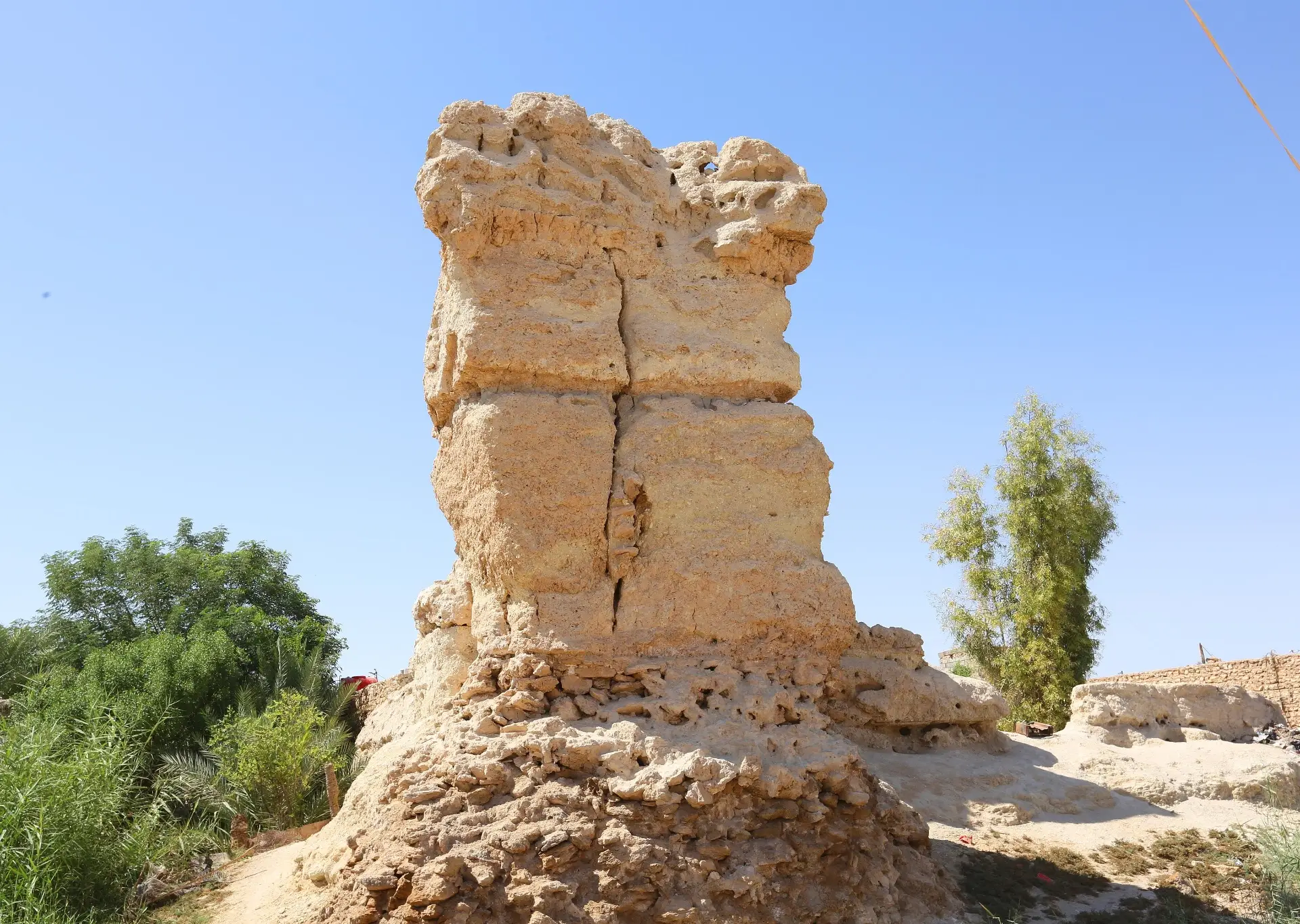
The Archaeological Palace of Shamoun
The Palace of Shamoun is considered one of the oldest monuments in the city of Karbala, dating back to the pre-Islamic period.
Several interpretations exist regarding the reason for naming the palace after Shamoun. The first opinion traces it to the fifth century CE, attributing it to Shamoun ibn Jabal Al Lakhmi, one of the prominent Christian scholars and clergymen who converted Al Nu'man ibn Al Mundhir, one of the kings of Al Hira, to Christianity in the sixth century CE.
The other opinion holds that the palace is attributed to King Shamoun, one of the Jewish kings who dwelt in the Shathatha region before the Islamic conquest of Iraq.
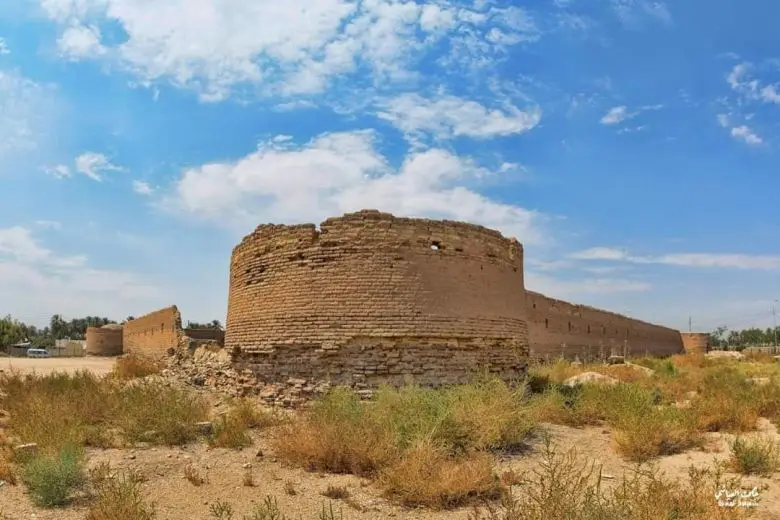
Nothing remains of the palace at present except ruins and some massive elevated walls, the thickness of its surviving corners reaching two meters and their height approximately seven meters above ground level.
The palace's perimeter is 500 meters, and at its center is an underground cellar six meters long and three meters deep. It was built with clay and limestone, the same materials used to build the Palace of Bardawil and Al Ukhaidir Fortress.
Its northern side was subjected to demolition, while part of the southern side remains, containing three underground cellars, one of which is in good condition. A standing gate that was in its wall dating to 1911 CE has since disappeared.
A Wall That Knows More Than It Says
3 Min · Arabic · English · Persian · Turkish
Frequently asked questions
What are the opening hours of The Archaeological Palace of Shamoun?
The Archaeological Palace of Shamoun is open 24 hours.
How much does it cost to visit The Archaeological Palace of Shamoun?
Admission to The Archaeological Palace of Shamoun is free.
How long should I spend at The Archaeological Palace of Shamoun?
Plan about ~ 30 min for The Archaeological Palace of Shamoun.
When is the best time to visit The Archaeological Palace of Shamoun?
Spring and autumn, and the cooler hours of morning or late afternoon; summer middays are punishingly hot. Bring water and sun protection — there is little shade.
Does The Archaeological Palace of Shamoun have an audio guide?
Yes — a narrated audio guide for The Archaeological Palace of Shamoun is available in the Travel Tale app.
Where is The Archaeological Palace of Shamoun located?
The Archaeological Palace of Shamoun is in Karbala: The Hajj Road، Near Al Ubayyid River, Ain Al Tamr District, Karbala.

Hear the full audio story — free in the app
Get app