
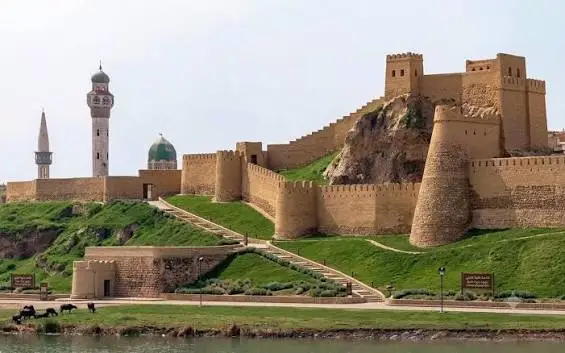
Bashtabia Castle
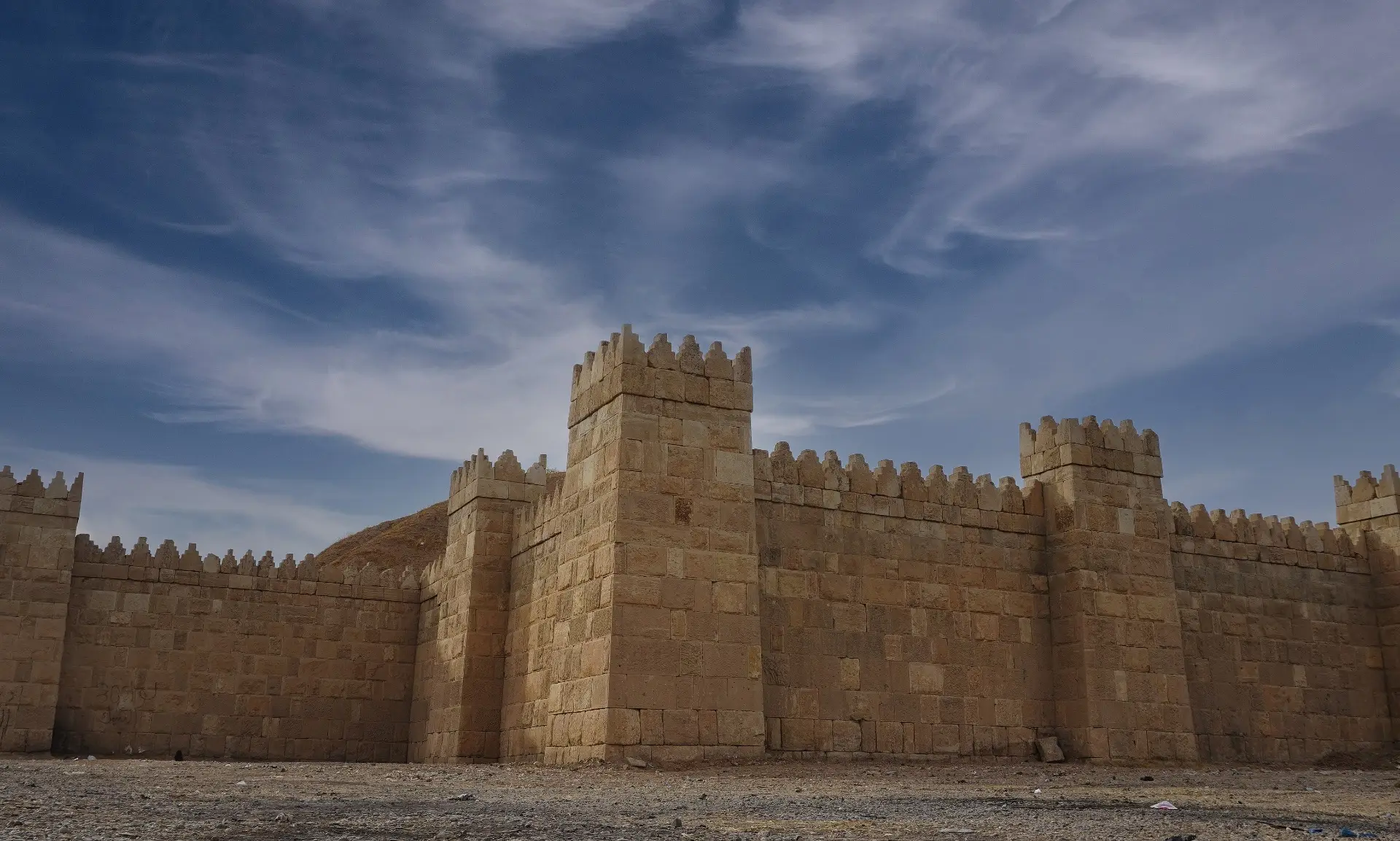
Bash Tabia Citadel is one of the authentic archaeological landmarks representing the city's identity, still bearing witness to many historical events. Its name derives from Turkish, composed of "bash" meaning main/chief and "tabia" meaning tower, named so because it occupies the highest point in old Mosul.
Its founding dates back to the second Hijri century (eighth century CE), when it was established during the reign of Marwan ibn Muhammad Al Umayyad between 126 and 128 AH.
The citadel has a history rich with repelling attacks on the city of Mosul across different eras, passing through multiple architectural phases, including its expansion in the Atabeg era and its restoration and repair by the Governor of Mosul Hussein Pasha Al Jalili. It was damaged by the Mongols in 1393 CE and then rebuilt during the Ottoman era.
The greatest event immortalized by this citadel in Mosul's memory is its heroic role in repelling the siege of Nader Shah in 1743 CE. It served as the command center for the battle on the side of Mosul's people, led by Hussein Pasha Al Jalili, after Nader Shah besieged Mosul with an army of over three hundred thousand fighters and subjected the city to approximately two hundred cannons day and night. Nader Shah failed to occupy Mosul and the siege was lifted on the twenty-third of October of the same year after a peace agreement was signed.
Bash Tabia Citadel is one of the important defensive structures, not only in Mosul but in the Islamic world, for its distinctive planning and innovative architectural elements such as arrow slits, horizontal and vertical corridors, and secret passages leading directly to the river.
What currently remains of it is its cylindrical tower standing on the Tigris River at a height of approximately sixteen meters, consisting of two parts: the lower part, the older, ending at the top with multi-directional arrow slits both vertical, angled, and double. Above it rises the second smaller section, leaving a walkway for defending soldiers and distinguished by its wide openings for artillery, used later during the Ottoman rule.
Bash Tabia is considered the last remaining historical citadel in the city after the disappearance of other fortresses, occupying a very important location that can be visited by tourists or archaeological specialists.
However, it suffers today from accumulated damage, its foundations subjected to significant harm as they rest on a rock layer susceptible to erosion and dissolution due to its proximity to the Tigris River, with a large crack in the main tower causing it to separate from the rest of the citadel's parts and lean toward the river.
It was also significantly damaged by military operations following the American invasion in 2003, ISIS's control in 2014, and the military operations that accompanied its liberation in 2017.
Mosul’s Wall above the Tigris
5 Min · Arabic · English · Persian · Turkish
Frequently asked questions
What are the opening hours of Bashtabia Castle?
Bashtabia Castle is open 24 hours.
How much does it cost to visit Bashtabia Castle?
Admission to Bashtabia Castle is free.
How long should I spend at Bashtabia Castle?
Plan about ~ 45 min for Bashtabia Castle.
When is the best time to visit Bashtabia Castle?
October–April; spring is especially good for mountain/valley scenery.
Does Bashtabia Castle have an audio guide?
Yes — a narrated audio guide for Bashtabia Castle is available in the Travel Tale app.
Where is Bashtabia Castle located?
Bashtabia Castle is in Mosul: On the banks of the Tigris River، Shafa, Mosul.
Hear the full audio story — free in the app
Get app