
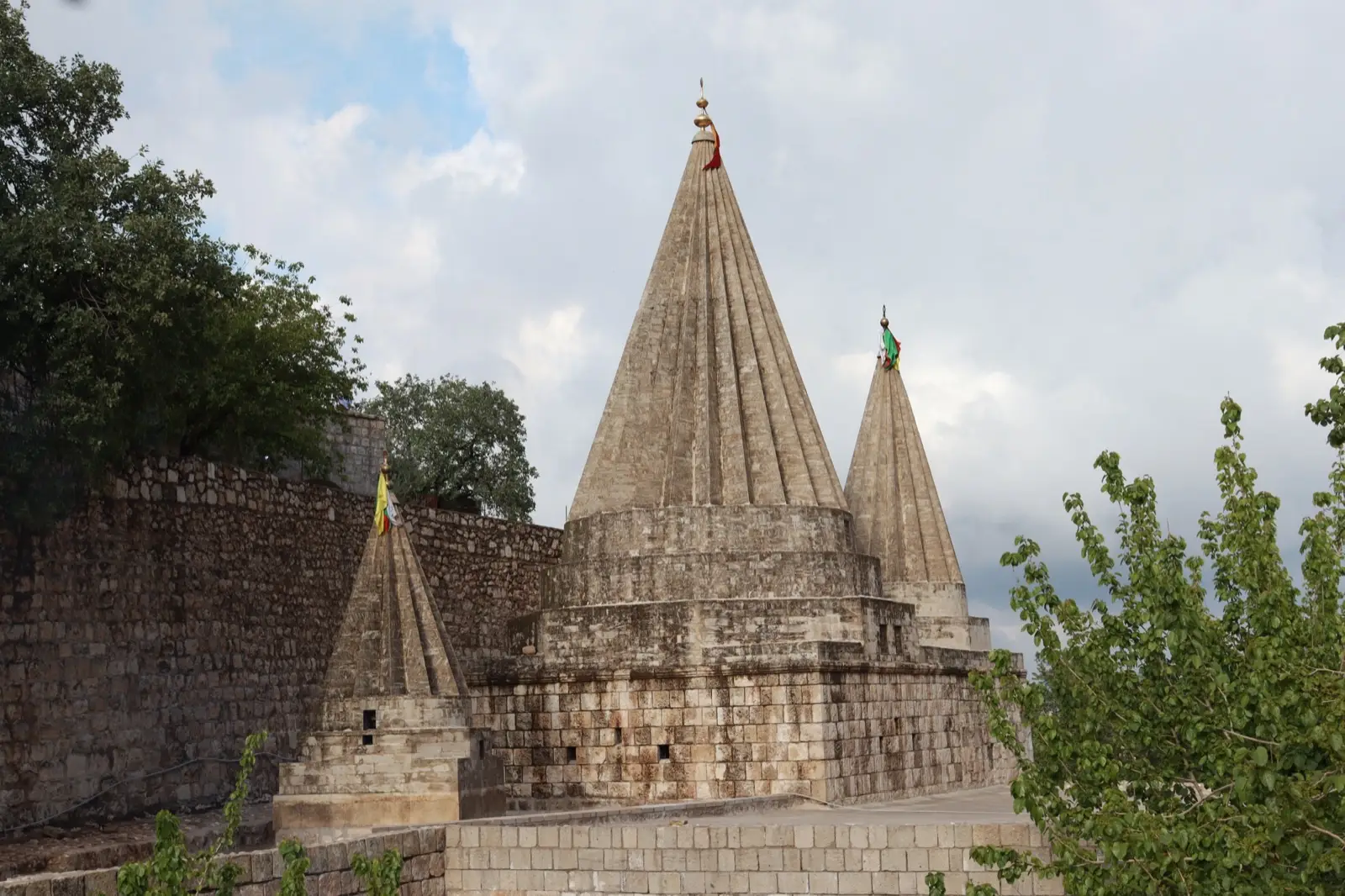
Lalish Temple
The word "Lalish" in the Kurdish language means the sacred site, and one of the Yazidi religious texts refers to it with the phrase "Lalish kar kanyate", meaning "and he made Lalish the foundation", as it is considered in Yazidi mythology the first site where the angels settled and the leaven of the universe that God made the starting point from which the world was formed.
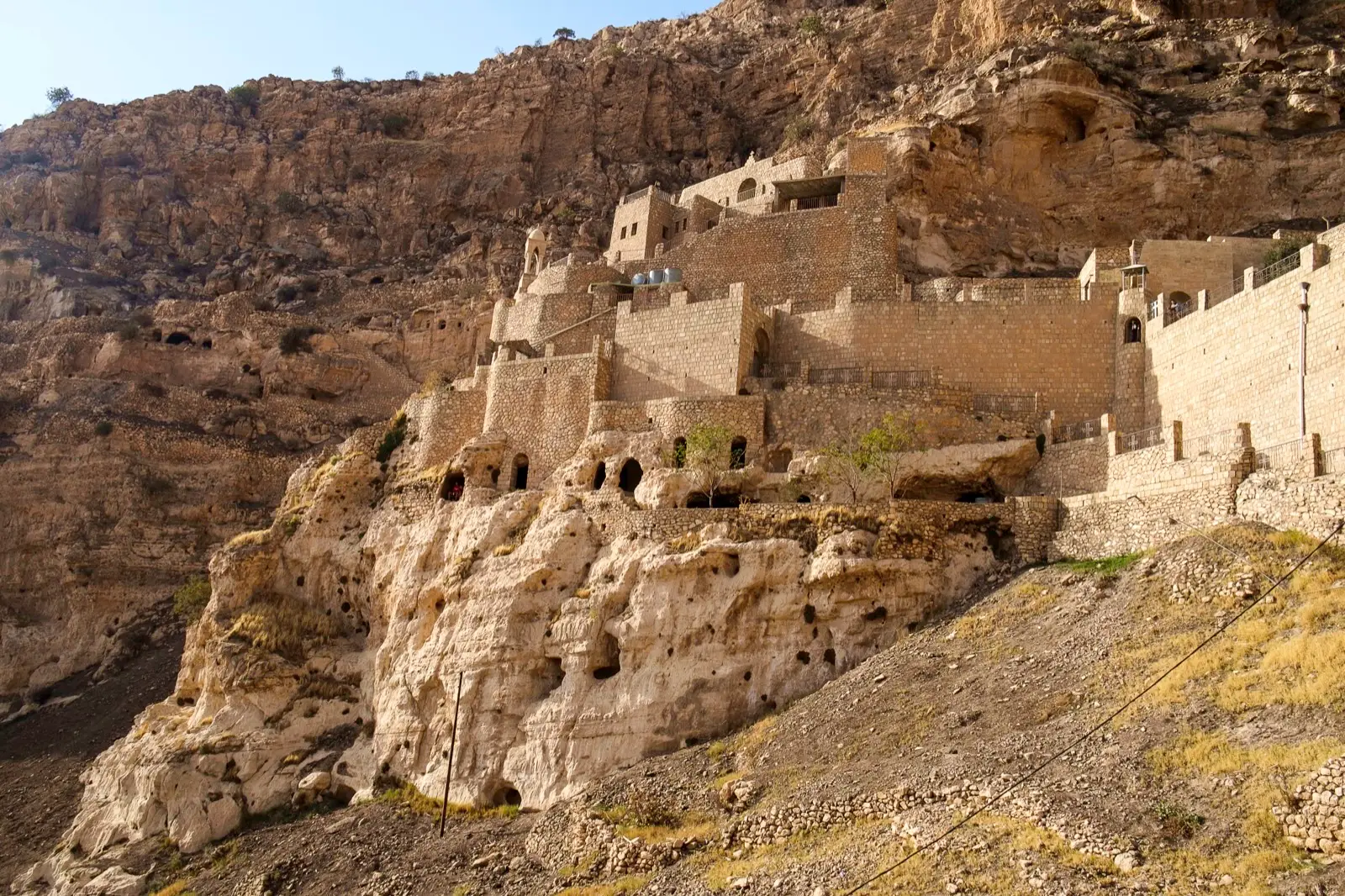
The temple is located in an enchanting mountain valley surrounded by three densely forested mountains, Arafat, Hazrat, and Masht, interspersed with fresh water springs, approximately sixty kilometers north of Mosul and fifty kilometers east of Duhok, at an elevation of approximately three thousand meters above sea level.
Opinions differ regarding its antiquity. While some trace it to the second or third century BC, others believe its history extends more than six thousand years. The original temple as a structure is one of the rooms carved in the mountain where olive oil used for the temple's illumination throughout history was stored. This room contains a pulpit in the form of a carved stone bench above which is the throne of Mithra and its ring, beside it a mihrab carved in the rock facing south, and ancient forms and symbols carved on the walls awaiting someone to unlock their secrets.
It is the primary and only temple of the Yazidi religion in Iraq and the world, and the holiest place on earth for them, representing their supreme spiritual reference.
Yazidis make pilgrimage to it once in their lifetime in a journey lasting seven days, while Yazidis living in the region perform an annual pilgrimage during autumn from the twenty-third of September until the first of October.
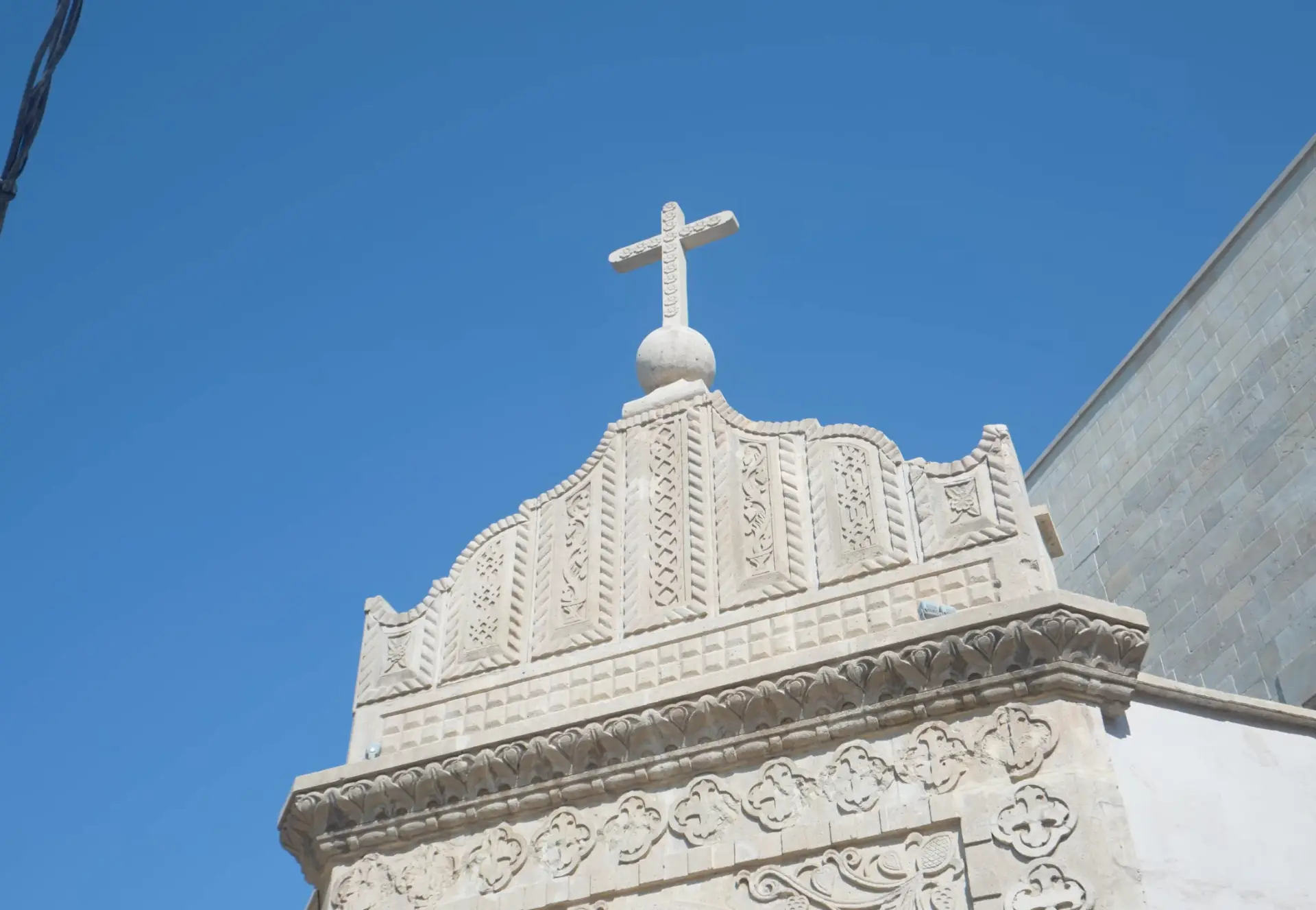
The temple is distinguished by a rare architectural style in which conical-shaped domes are manifested, containing seven carved lines called "zunuj" or sun-ray threads, symbolizing the seven sacred angels, converging at a single point at the top as a reference to God's oneness. They may consist of twelve lines indicating the months of the year, facing the sun due to its sacred status in the Yazidi religion, and crowned with a golden crescent as a sacred symbol.
The dome rests on a square or rectangular base symbolizing the four directions and four elements, (air, water, fire, and earth), above which is an octagon centered by a circle or several circles indicating the roundness of the universe and the sacred solar disc.
In front of the main door is a wide iwan paved with Hallan stone, centered by seven columns of limestone each five meters high, each column symbolizing one of the seven angels.
On both sides of the site are distributed the "fatayil" locations, the lamps lit every Wednesday, the sacred day for Yazidis. The temple's custodian lights 365 lamps before sunset daily to return the sun's light to the temple, according to Yazidi philosophy which holds that the sun's light is God's light.
The temple contains the grave of Sheikh Adi ibn Musafir Al Hakkari, the principal religious reformer of the Yazidi faith who retreated to this valley and established many new principles in the religion. Within it is a water spring flowing into a main channel inside a deep cave descended by seven steps. At the highest point of the site is the oldest location in the temple known as "Khana deh ana", the House of the Jars, where oil was stored, with some of its lamps still standing dating back more than three hundred years.
Enter the Sacred Valley Barefoot
4 Min · Arabic · English · Persian · Turkish
Frequently asked questions
What are the opening hours of Lalish Temple?
Lalish Temple is open 24 hours.
How much does it cost to visit Lalish Temple?
Admission to Lalish Temple is free.
How long should I spend at Lalish Temple?
Plan about ~ 2 Hours for Lalish Temple.
When is the best time to visit Lalish Temple?
October–April; spring is especially good for mountain/valley scenery
Does Lalish Temple have an audio guide?
Yes — a narrated audio guide for Lalish Temple is available in the Travel Tale app.
Where is Lalish Temple located?
Lalish Temple is in Mosul: Lalish Street، near Ain Sifni، Sheikhan, North Mosul.
Hear the full audio story — free in the app
Get app