
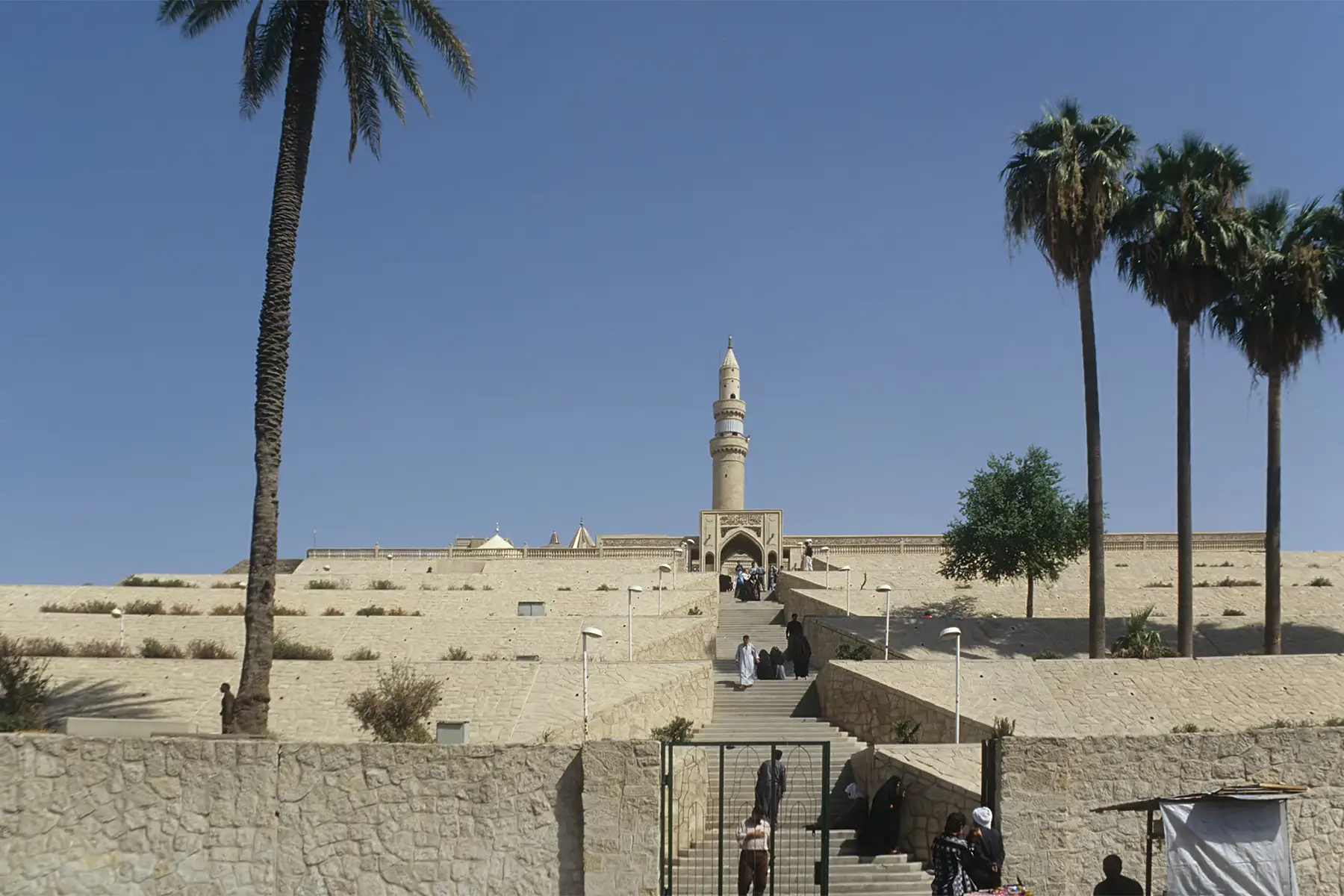
Prophet Yunus Mosque (Jonah)
The Mosque of Prophet Yunus (Jonah) is one of Iraq's historical and archaeological mosques, associated with the name of Prophet Yunus who was sent to one hundred thousand people, who believed in him and were saved from punishment as mentioned in the Holy Quran.
Some historical sources indicate that its first construction was during the reign of the Rightly Guided Caliph Umar ibn Al Khattab in 17 AH, making it the second mosque in Mosul after the Umari Mosque built in 16 AH. However, historical researcher Ibrahim Ghazal confirms there is no documented date for its construction, as historian Abu Zakariya Al Azdi (died 334 AH) indicates it was built in the third Hijri century or before.
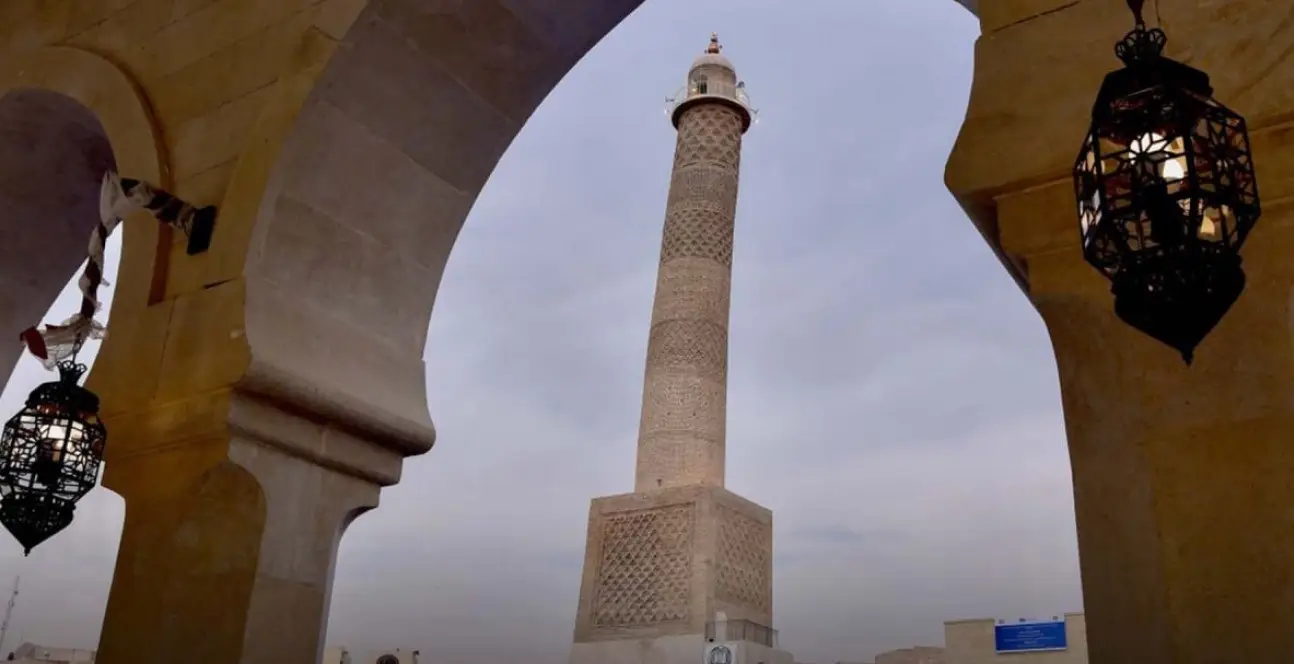
The mosque was built atop a hill, giving it a distinctive prominent view among the city's landmarks. Its terraced form suggests a spiritual ascent toward the divine, and its outer walls are clad with yellowish-white Hallan stones. Its architectural design shows closeness to Turkish architecture. Its main courtyard rises approximately 18 meters above street level through six successive terrace stages, and its minaret rises approximately 40 meters above the courtyard level.
The Islamic State organization (ISIS) detonated the mosque on the twenty-fourth of July 2014, placing explosives on its internal and external walls, ordering worshippers to leave and asking residents to move at least 500 meters away. Within seconds, the shrine was reduced to rubble.
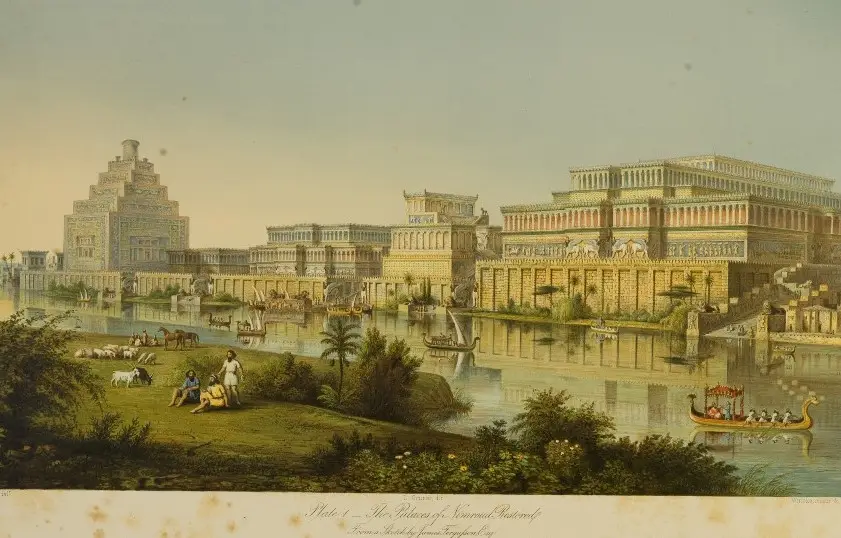
When the Iraqi Army recaptured eastern Mosul in 2017, archaeologists found beneath the rubble more than fifty new tunnels that ISIS had dug to access artifacts. A buried palace dating to the seventh century BC was revealed, the headquarters of Assyrian kings, the Palace of King Esarhaddon. Stone tablets bearing the names of Kings Esarhaddon and Ashurbanipal were found there, along with "Lamassu" statues, the winged bulls guarding the entrances of Assyrian palaces, as well as unique engravings of women shown with full-face depictions, something not found anywhere else.
On the third of April 2026, the mosque was reopened after 12 years since its destruction, in the presence of thousands from Mosul and neighboring cities. The people of Mosul fully funded its reconstruction through donations without the state bearing any expenses. The reconstruction process took more than four years. Architect Dr. Ahmad Al Omari based his interior design on the traditional Mosul architectural style of arches, vaults, and Mosul stone, with column capitals reflecting the concept of glorification (tasbih) inspired by the story of Prophet Yunus and his being among those who glorify God. The agreement between the Sunni Endowment and the Nineveh Antiquities Inspectorate stipulated converting the site of Esarhaddon's Palace into an open cultural museum connecting religious heritage with Assyrian legacy, with Mosul thereby having reclaimed the majority of its historical mosques destroyed by ISIS.
They Demolished It and It Revealed What Could Not Be Seen
4 Min · Arabic · English · Persian · Kurdish (Kurmanji)
Frequently asked questions
What are the opening hours of Prophet Yunus Mosque (Jonah)?
Prophet Yunus Mosque (Jonah) is open 24 hours.
How much does it cost to visit Prophet Yunus Mosque (Jonah)?
Admission to Prophet Yunus Mosque (Jonah) is free.
How long should I spend at Prophet Yunus Mosque (Jonah)?
Plan about ~ 30 min for Prophet Yunus Mosque (Jonah).
When is the best time to visit Prophet Yunus Mosque (Jonah)?
Open year-round; dress modestly and, for a calmer visit, avoid the busiest Friday midday prayers.
Does Prophet Yunus Mosque (Jonah) have an audio guide?
Yes — a narrated audio guide for Prophet Yunus Mosque (Jonah) is available in the Travel Tale app.
Where is Prophet Yunus Mosque (Jonah) located?
Prophet Yunus Mosque (Jonah) is in Mosul: The Western Slope of Tawba Hill, Prophet Yunus Neighbourhood, Mosul.
Hear the full audio story — free in the app
Get app