
Hatra City
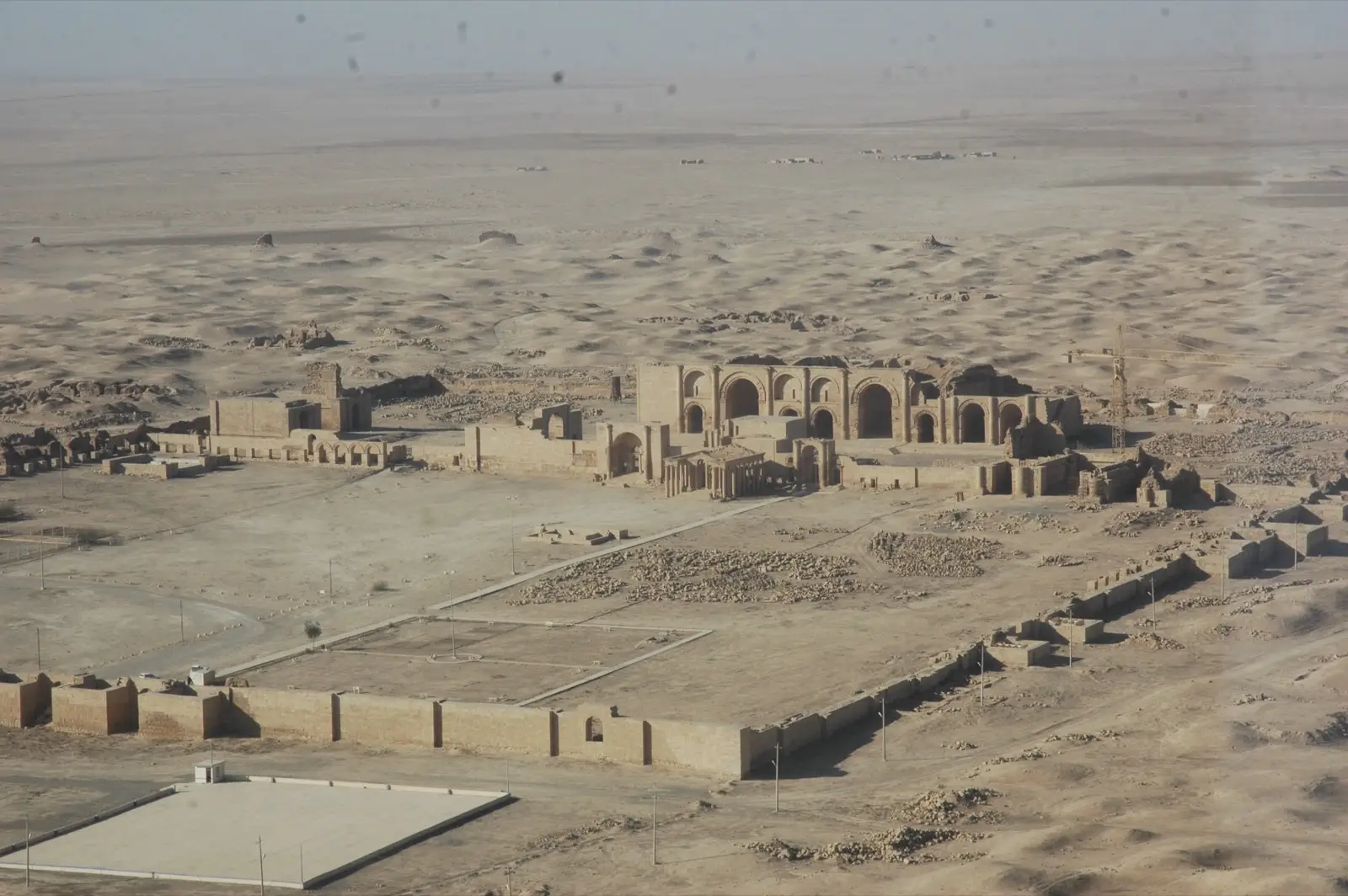
The city of Hatra is located in the heart of the northern Jazira desert, midway between the Tigris and Euphrates rivers on the northwestern side, with the Wadi Al Tharthar running along its eastern edge.
The city is believed to have been founded at the beginning of the second century BC, and the rule of the Kingdom of Hatra, also known as the Kingdom of Arabaya, continued until 241 CE when it fell at the hands of the Sassanian King Shapur I.
It grew on the ruins of settlement layers dating back to the Neo-Assyrian period between 911 and 612 BC, then expanded until it developed an independent political entity. In the second century BC the kingdom began to emerge, and King Sanatruq II managed to expand it, in his era it extended beyond the Euphrates River westward and reached the borders of the Levant, then under Roman rule.
What most distinguishes Hatra is that it was among a constellation of kingdoms that flourished in the Fertile Crescent region during that period, including the Nabataean Kingdom with its capital Petra, the Kingdom of Palmyra, and the Lakhmid state with its capital Al Hira. It succeeded in establishing itself as an architectural fortress with multiple civilizational contributions across various fields. It is also considered the first Iraqi archaeological site inscribed on the UNESCO World Heritage List in 1985.
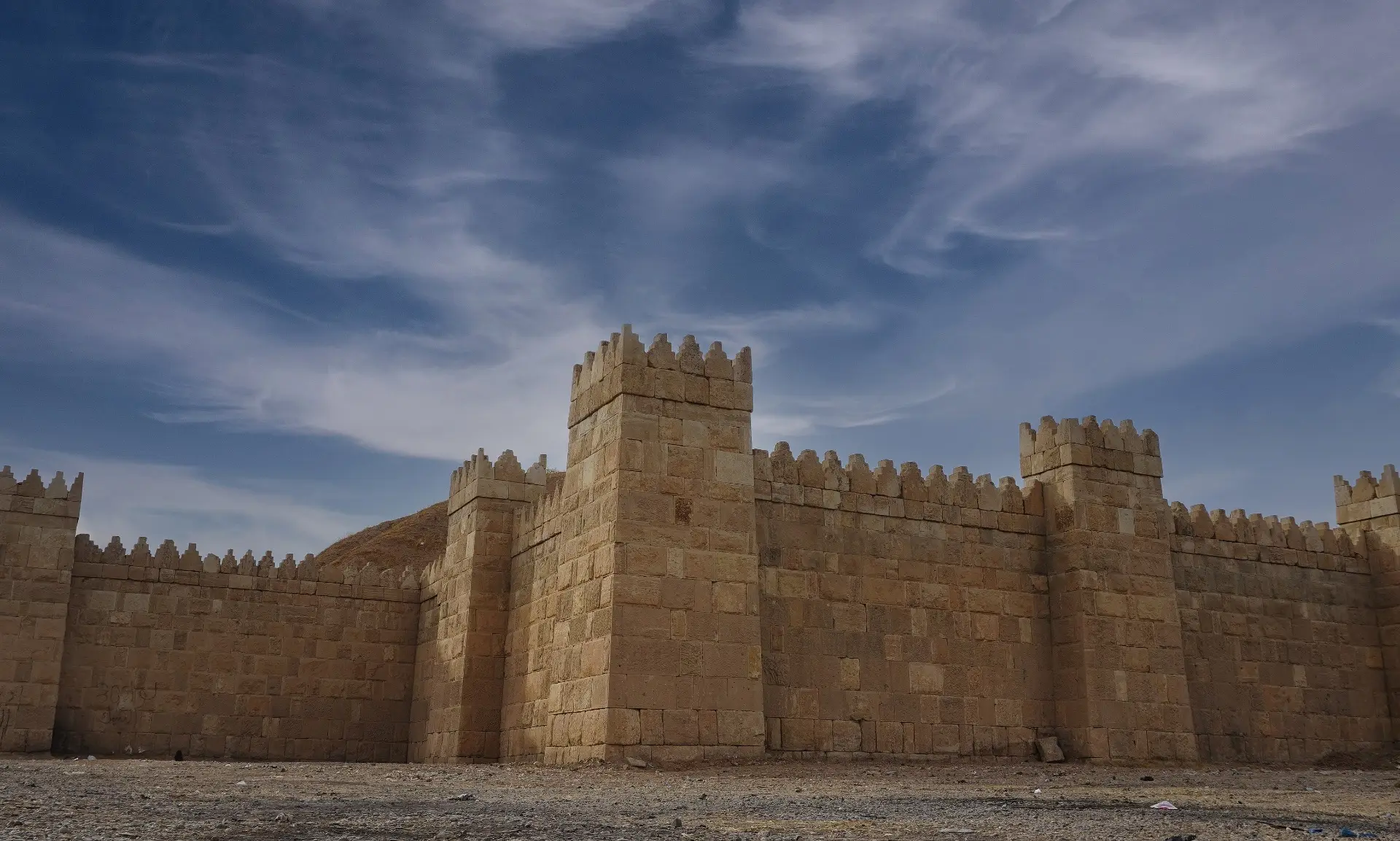
The city of Hatra is approximately circular, with a diameter of about two kilometers, surrounded by a deep protective moat and a wall reinforced by 163 towers. This wall consists of two sections, each three meters and 2.5 meters wide respectively, with a 12-meter gap between them at the northern gate. An earthen embankment wraps around the city on all sides at half a kilometer outside the wall, with a number of fortresses located on its outskirts.
Hatra is considered the only standing archaeological city in Iraq built in a distinctive architectural and artistic style, whether in technique, construction method and materials, or design and ornamentation.
It is particularly rich with hundreds of sculptures, decorated with multiple statues of animals, figures, and deities, in addition to urban structures and ancient temples dating to different historical periods.
The Great Temple at its heart contains several temples and shrines, each dedicated to a deity, with a row of iwans facing east, behind which is the solar sanctuary: a square structure surrounded by corridors.
In the 1950s, an archaeological mission found inscriptions carved on large stones containing legal provisions and customs relating to theft and its punishment.
It is clear that the city's inhabitants were completely expelled following its fall according to the customs of the victors, and it was never resettled, as no trace of occupation after the siege has been found.
Since then the city remained silent for centuries, guarded by its towering edifices and carved ornamentations that withstood natural elements and the vicissitudes of history, until ISIS destroyed in 2015 many of its landmarks that had stood for thousands of years.
Frequently asked questions
What are the opening hours of Hatra City?
Hours unavailable
How long should I spend at Hatra City?
Plan about ~ 1h 30m for Hatra City.
When is the best time to visit Hatra City?
October–April
Where is Hatra City located?
Hatra City is in Mosul: Al Hatra, Nineveh.
Plan your visit — free in the app
Get app