
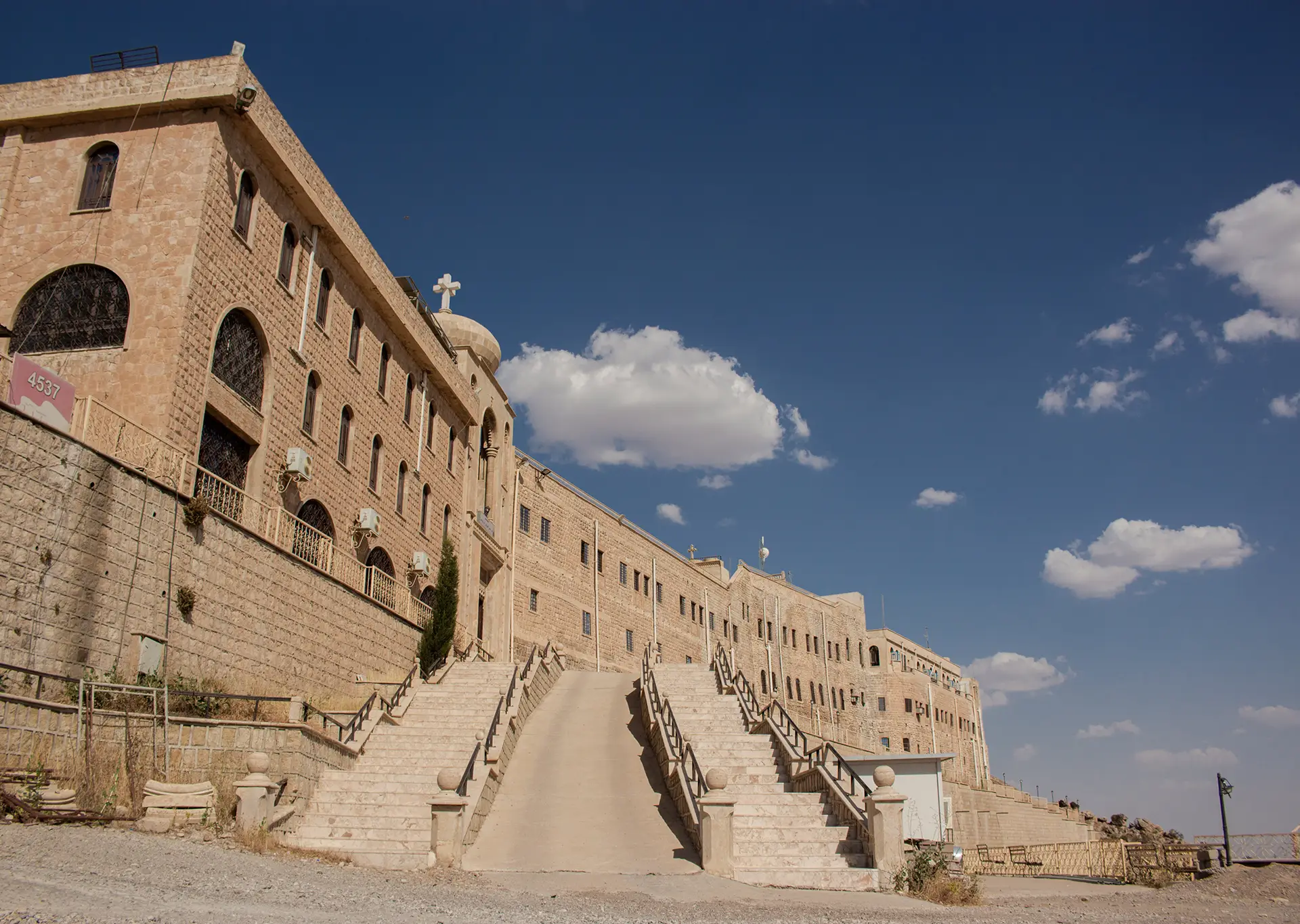
Mar Mattai Monastery
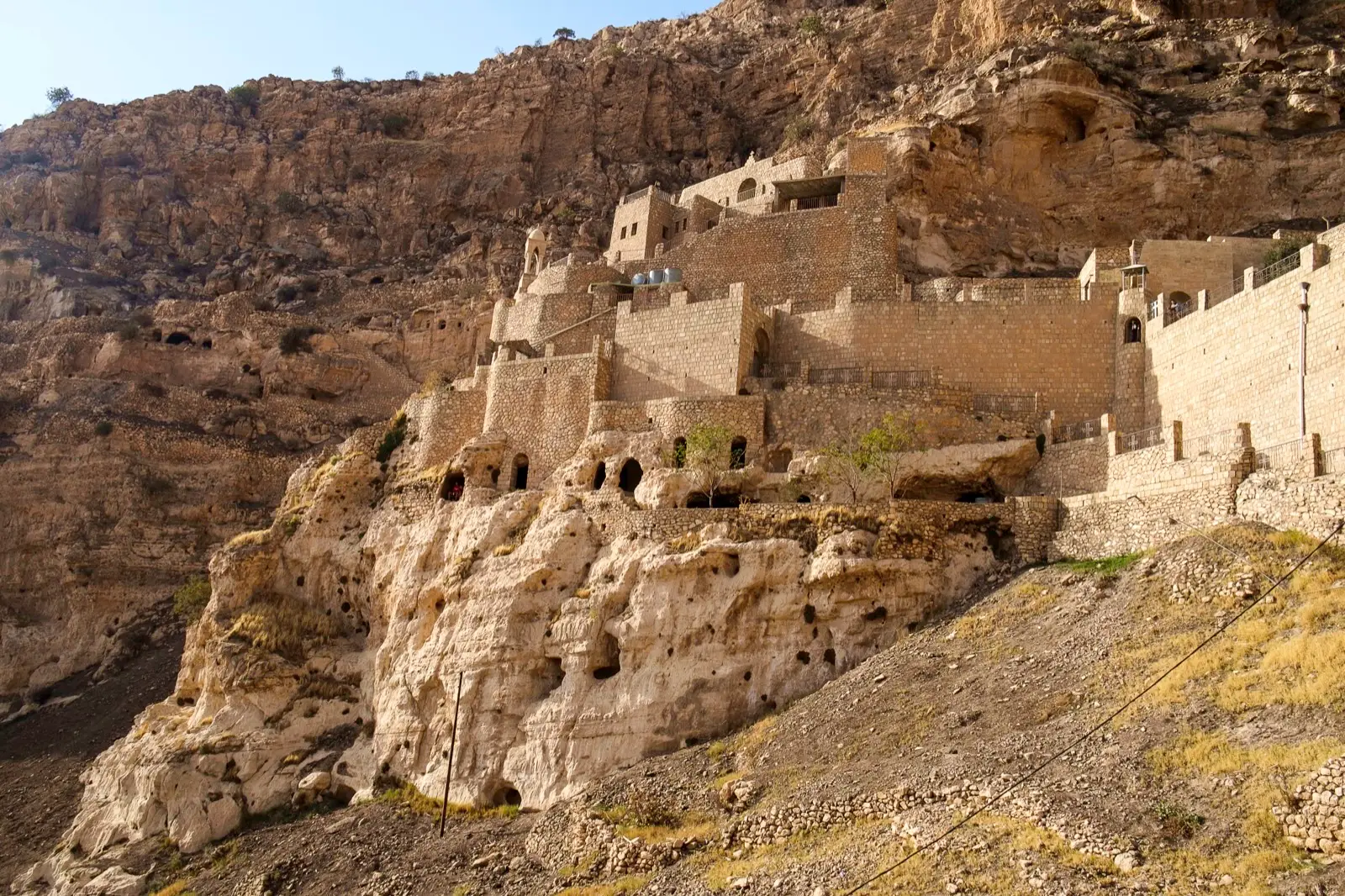
The Syriac Orthodox Monastery of Mar Mattai is located at an elevation of 817 meters above Mount Maqlub, also known as the Mountain of Thousands, in northern Nineveh Governorate, 38 kilometers northeast of Mosul. It is positioned on the edge of a towering rocky summit that makes it appear, when seen from the valley, suspended between heaven and earth, inviting the observer to contemplation, while from its terrace a 180-degree panoramic view opens over the vast Nineveh Plain, as if it watches over those below.
It is considered the largest monastery of its kind for the Syriac Orthodox Church in Mesopotamia. Tradition recounts that Saint Mattai was a monk from the Diyarbakir region in southeastern Turkey who was forced to flee the persecution of Roman Emperor Julian, settling on this mountain and founding the monastery in 363 CE, the same year Julian died following the Battle of Samarra against the Sassanian Persians.
At the end of the fourth century CE, the monastery reached its peak of prosperity, housing thousands of monks, believed to be the reason the mountain was named "the Mountain of Thousands." It then became the seat of the Maphrian of the East, head of the Syriac Orthodox Church for Mesopotamia after his departure from Tikrit, with deep historical ties to the Malankara Church in India.
The monastery faced severe trials throughout its long history. In 480 CE a devastating fire destroyed its features, before the monks returned at the end of the fifth century and it was restored, its name re-emerging in 544 CE. In 1171 CE it was abandoned due to attacks from neighbors, with activities resumed in 1187 CE. After 1260 CE it suffered Mongol and Tatar raids. In the late fourteenth century under Tamerlane it became a refuge for criminals and its monks were scattered, remaining abandoned and forgotten for more than one hundred and fifty years before beginning to shine again after 1660 CE in the Ottoman era.
The monastery served through the centuries as a refuge and place of resistance against attacks in the twelfth and fourteenth centuries, and in 1918 sheltered Patriarch Simon Peter XXII who took refuge there and died within its walls during the Assyrian-Chaldean genocide, at a time when sixty thousand Assyrians were displaced from Urmia to Mesopotamia. During ISIS's attack in 2014, its forces stopped in the valley a few kilometers from the monastery, while its walls welcomed villagers displaced from surrounding villages.
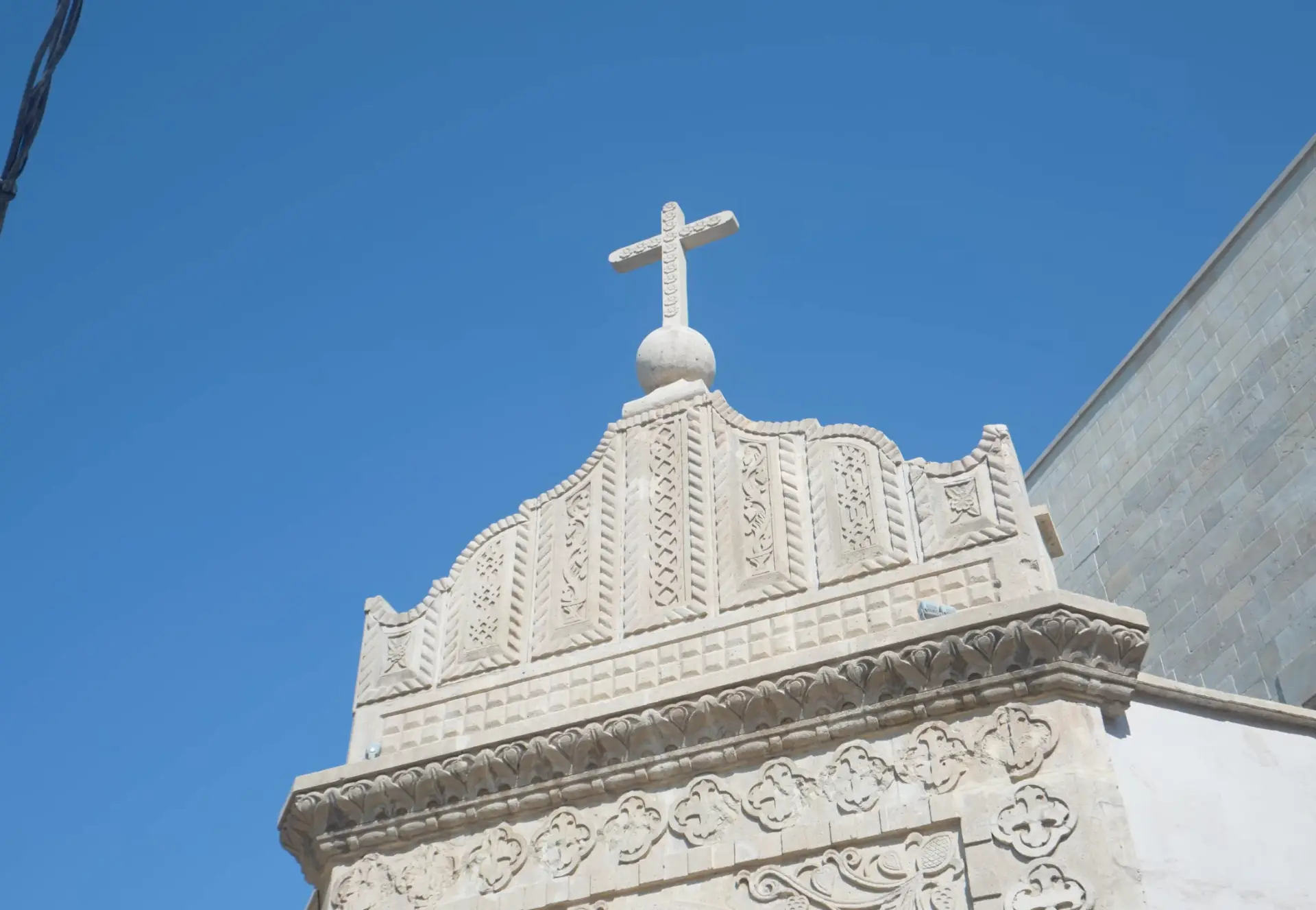
The monastic complex consists of several churches, most prominently the main church dedicated to Mar Mattai, alongside chapels for votive prayers and hermit cells carved into the mountain itself, witnessing the faith and asceticism of the early fathers.
A small monastic community still maintains the heritage of this ancient edifice today, receiving pilgrims who come with the same fervor the mountain has known for more than sixteen centuries.
The Monk Fleeing Persecution and the Mountain That Sheltered Him.
5 Min · Arabic · English · Persian · Kurdish (Kurmanji)
Frequently asked questions
What are the opening hours of Mar Mattai Monastery?
Mar Mattai Monastery is open 24 hours.
How much does it cost to visit Mar Mattai Monastery?
Admission to Mar Mattai Monastery is free.
How long should I spend at Mar Mattai Monastery?
Plan about ~ 2 Hours for Mar Mattai Monastery.
When is the best time to visit Mar Mattai Monastery?
October–April; spring is especially good for mountain/valley scenery. Visit on weekday mornings for quiet reflection
Does Mar Mattai Monastery have an audio guide?
Yes — a narrated audio guide for Mar Mattai Monastery is available in the Travel Tale app.
Where is Mar Mattai Monastery located?
Mar Mattai Monastery is in Mosul: Top of Mount Maqlub (aka Mount Alfaf), Nineveh Plains.
Hear the full audio story — free in the app
Get app