
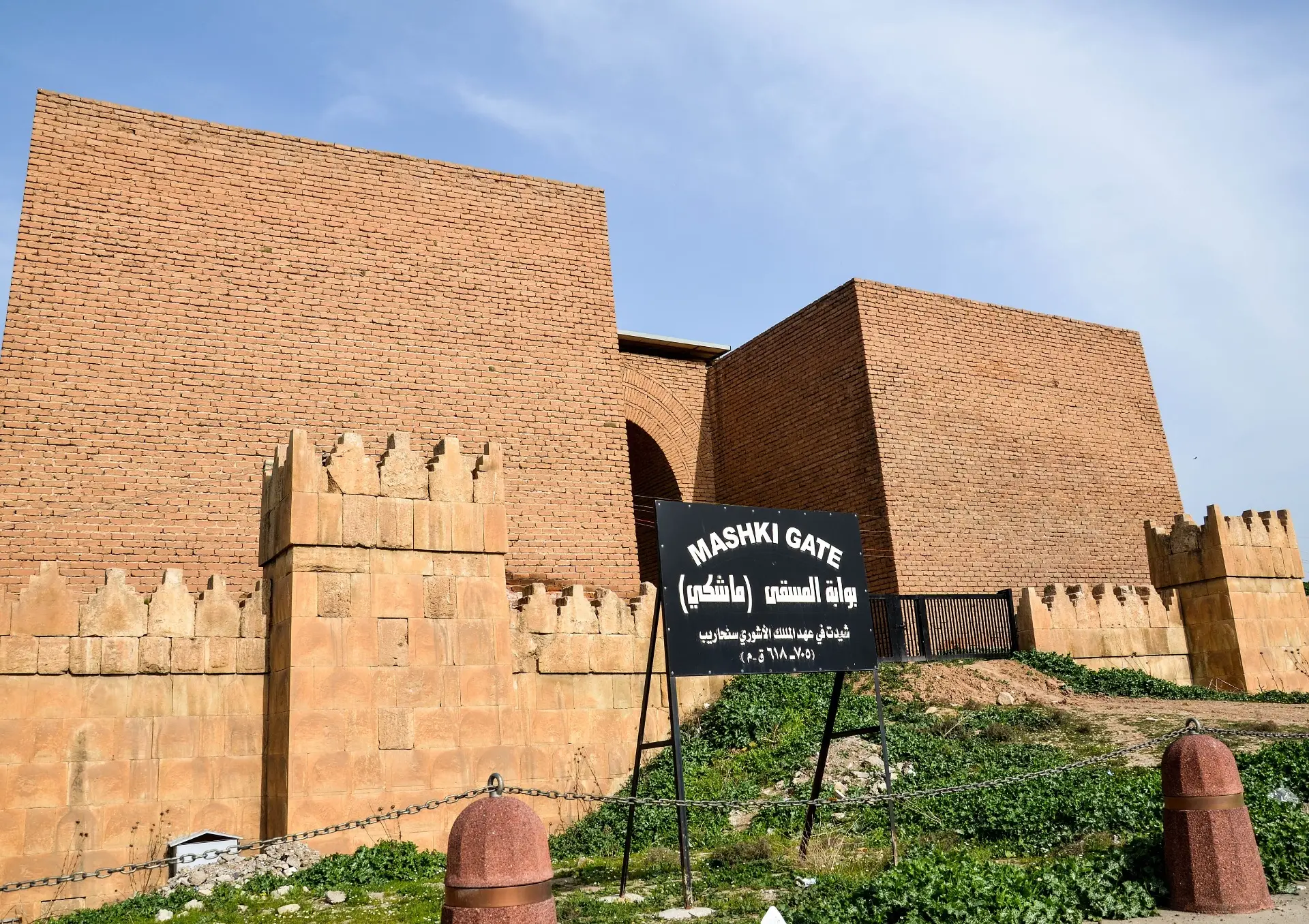
Mashki Gate
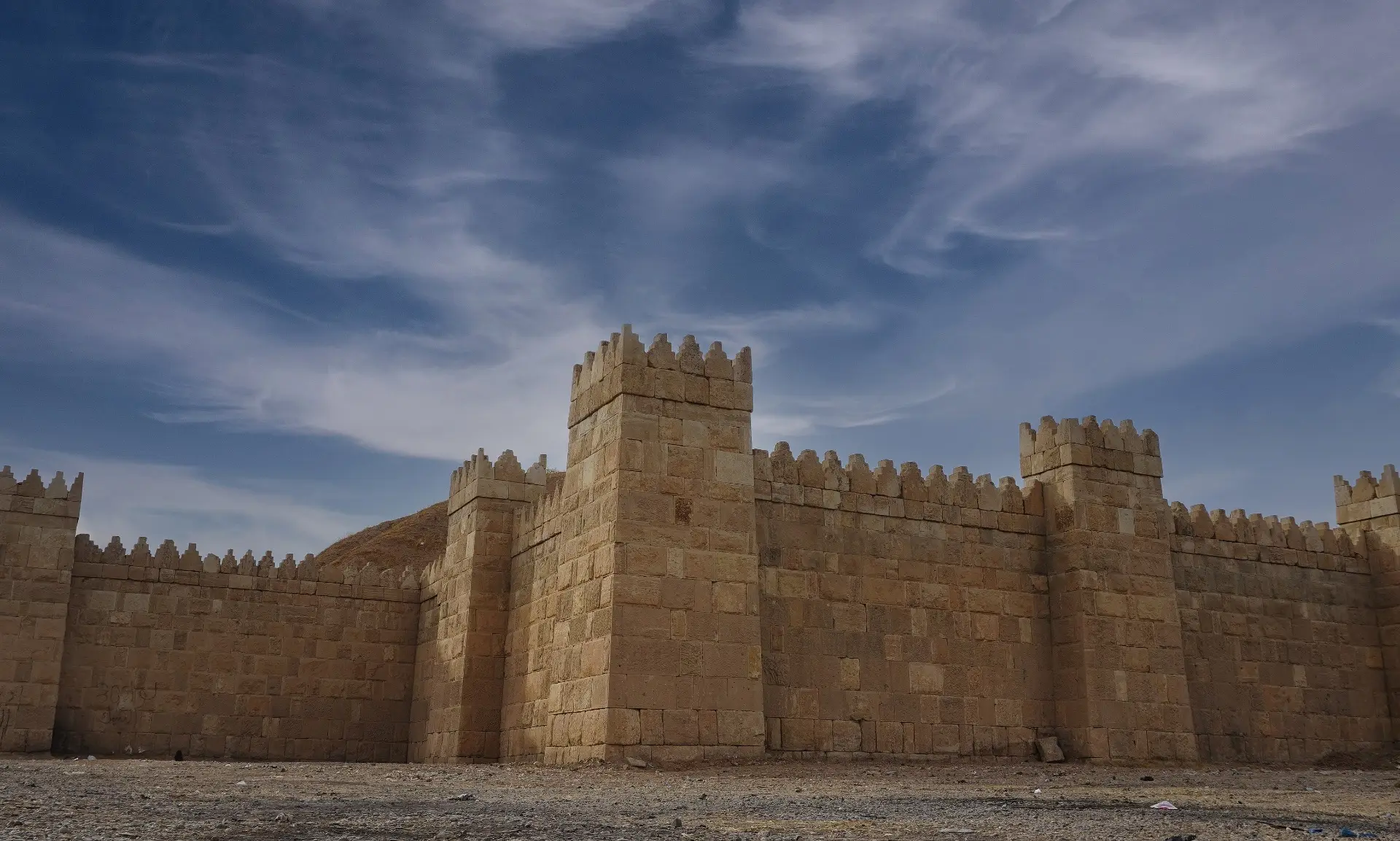
The Mashki Gate, or "Mashki" as it was known in Assyrian texts, is one of the archaeological gates in the city of Mosul in the center of Nineveh Governorate in northern Iraq, one of the ancient gates of Nineveh, located on the western side of the city wall. It acquired its name from its use for watering livestock near the Tigris River, which lies approximately one and a half kilometers to its west, revealing its daily function in the life of the Assyrian capital's residents.
It was discovered in 1968, when the General Authority for Antiquities and Heritage conducted extensive and comprehensive excavations, revealing all the gate's features. The gate's entrance connects to a large hall, and the entrance and corridor walls are decorated on the inside with marble pieces inscribed with the name of King Sennacherib. Large stone towers surround the gate on both sides.
This gate dates back to the Neo-Assyrian period during the reign of King Sennacherib around 700 BC, representing part of a tight defensive system that surrounded the greatest capital the ancient world had known at the time.
In 2016, ISIS destroyed this ancient archaeological gate. But the destruction intended to erase history revealed a major surprise, when the joint American-Iraqi excavation team began reconstruction work, they found in the depths of the rubble eight marble tablets dating back approximately 2,700 years, adorned with highly precise wall carvings depicting battle scenes from the time of the Assyrian kings, as well as vineyards and date palms.
Seven additional wall carvings from the same Assyrian period were also found, containing scenes of men in combat positions and olive trees, grape vines, and city walls.
Archaeologists believe these buried marble tablets were part of Sennacherib's famous palace that adjoined the gate, making the Mashki Gate a gateway to history in two senses: the historical and the literal simultaneously.
The joint archaeological mission continues its work at the site as part of a reconstruction project supervised by the Nineveh Antiquities and Heritage Inspectorate in cooperation with the Engineering Consultancy Office at the University of Mosul, funded by the Alef Foundation, with the aim of restoring this civilizational edifice as a symbol of the shared history of Mosul's residents.
When Restoration Reveals History
3 Min · Arabic · English · Persian · Turkish
Frequently asked questions
What are the opening hours of Mashki Gate?
Hours unavailable
How much does it cost to visit Mashki Gate?
Admission to Mashki Gate is free.
How long should I spend at Mashki Gate?
Plan about ~ 45 min for Mashki Gate.
When is the best time to visit Mashki Gate?
October–April
Does Mashki Gate have an audio guide?
Yes — a narrated audio guide for Mashki Gate is available in the Travel Tale app.
Where is Mashki Gate located?
Mashki Gate is in Mosul: Ancient Nineveh.
Hear the full audio story — free in the app
Get app