
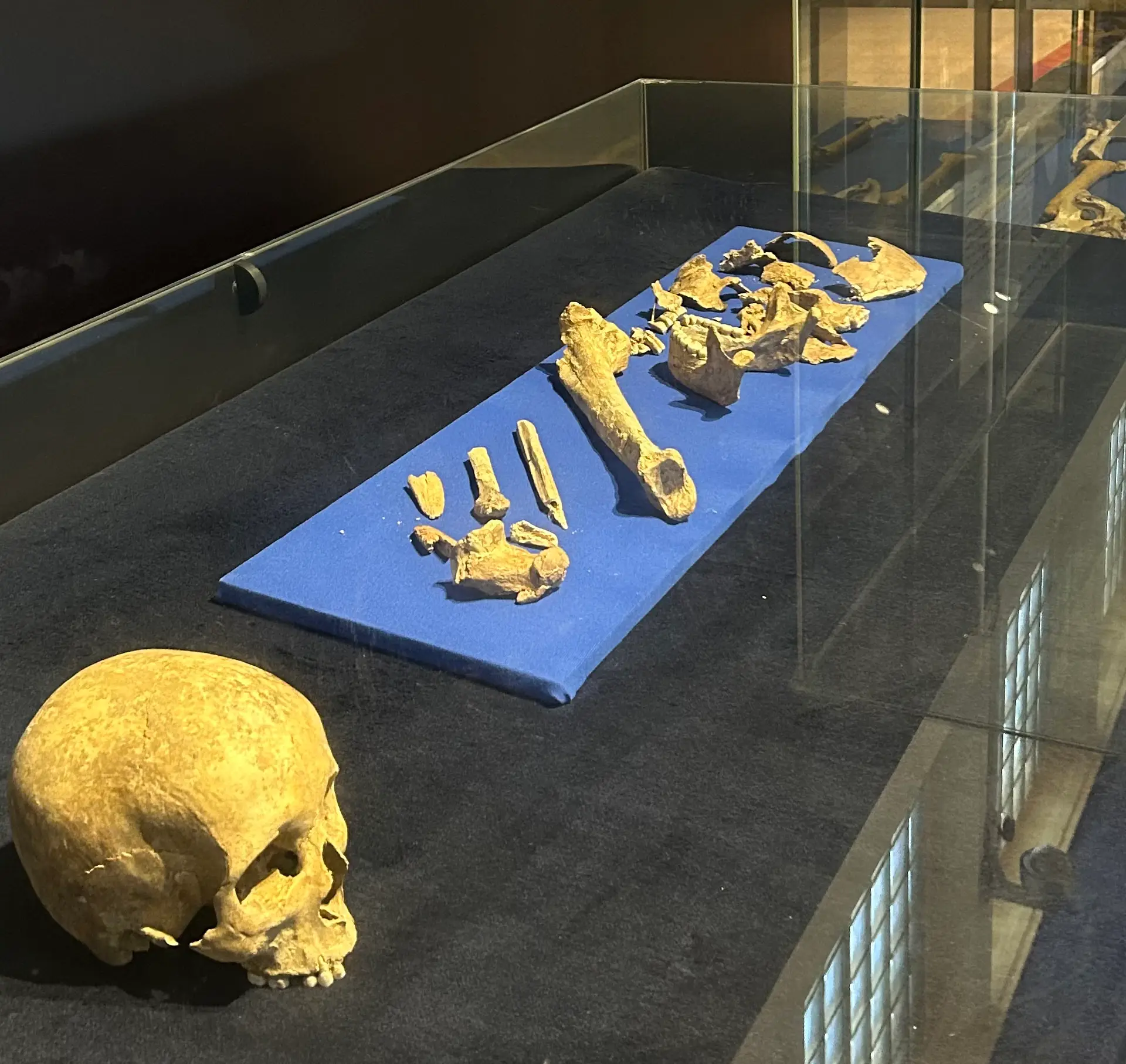
01 & 02 Behnam Abu Al Suf Hall (Prehistoric)
Iraqi National Museum
This hall contains the remains of humans who settled in the northern regions of Mesopotamia and made caves and plateaus their dwelling place, where their stone and bone tools were found in the depths of these caves and on the highlands. These early ages are called the Old Stone Ages (Paleolithic), which is a long period in Iraq spanning between (100,000 years) to (10,000 years). During this time, humans lived as nomadic hunters gathering sustenance from hunting and vegetation. Among the most famous sites of these ages are Barda Balka, Shanidar, Hazar Merd, Zarzi, and many other caves and sites.
In the New Stone Age (Neolithic) about (10,000 years ago), humans settled and began to farm and raise livestock, forming the first villages. They began producing their own sustenance and developed social life and religious beliefs. The most famous villages are Jarmo, Tell es-Sawwan, Hassuna, and Samarra. Over thousands of years, the population increased, villages grew and transformed into thriving cities, farms expanded, trade flourished, and city inhabitants invented new industries, including pottery, which was simple at first but then developed. They invented the potter's wheel and colored pottery with bright colors and beautiful geometric shapes.
The manufacture of dolls and stone or clay figurines also flourished, most of which represented the mother goddess, the source of fertility, reproduction, and blessing, or represented animals that lived alongside these humans. Then copper entered into manufacturing.
As for the art of architecture, it advanced extensively and buildings were constructed with regular mud bricks or stones, so cities, temples, and palaces were built.
In this hall are selected samples from the artifacts of these villages, cities, and civilizations from northern and southern Iraq. The time of these civilizations ends in the middle of the fourth millennium BC, which is known as the prehistoric era.
The Second Hall: Displayed artifacts from a transitional period between prehistoric and historical ages. This is a period of time famous for the civilizations of Ubaid, Uruk, and Jemdet Nasr, spanning the fourth millennium BC between (4,000 - 3,000). During this period, humans used copper extensively and employed the fast-spinning potter's wheel to manufacture pottery in large quantities. They built extensive cities surrounded by walls and magnificent temples decorated with mosaics and pigments.
01 & 02 Behnam Abu Al Suf Hall (Prehistoric)
Arabic · English
Hear this stop narrated — free in the app
Get app