
Al Qasim's Bride
Baghdadi Heritage Museum
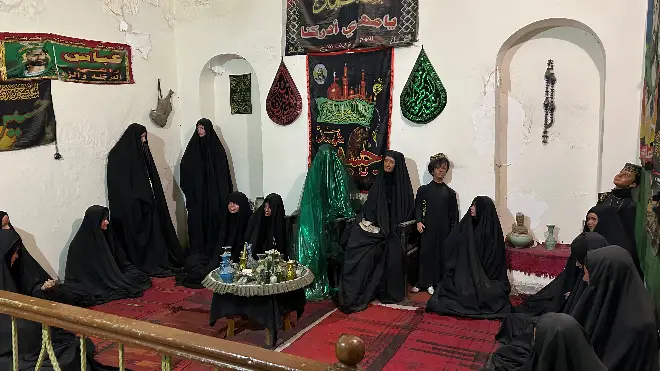
“The Al Qasim Bride” scene is one of the most emotional traditional rituals performed in Baghdadi Hussaini gatherings. It is held in remembrance of the symbolic wedding of “Al Qasim Ibn Al Hasan” (peace be upon him) during the events of Karbala, where this ritual represents themes of sacrifice and devotion.
In this depiction, “Al Qasim”, is presented as a young groom who is led not to a real wedding, but to the battlefield, symbolizing the “martyr groom.” A casket decorated in green and white is carried among mourning processions, representing a sorrowful, grief-filled “wedding” with no joy in it.
Some children or youths wear white or green garments symbolizing innocence and martyrdom. The gatherings are adorned with flowers and candles, and in some areas, sweets and henna are distributed as symbolic elements of “Al Qasim's Wedding,” though the scene remains overwhelmingly somber and mournful rather than festive.
This ritual captures the stance of “Al Qasim”, who despite his young age did not hesitate to sacrifice himself in support of “Imam Al Hussein”, becoming a “groom of Paradise” instead of celebrating a worldly wedding.
“The Bride of Al Qasim” scene continues to be performed annually during Ashura rituals in Baghdad, attended by Baghdadi families with profound emotional engagement. It has become one of the most significant and enduring Ashura symbols in the Iraqi Shi‘i collective memory.
Al Qasim's Bride
Arabic · English
Hear this stop narrated — free in the app
Get app