
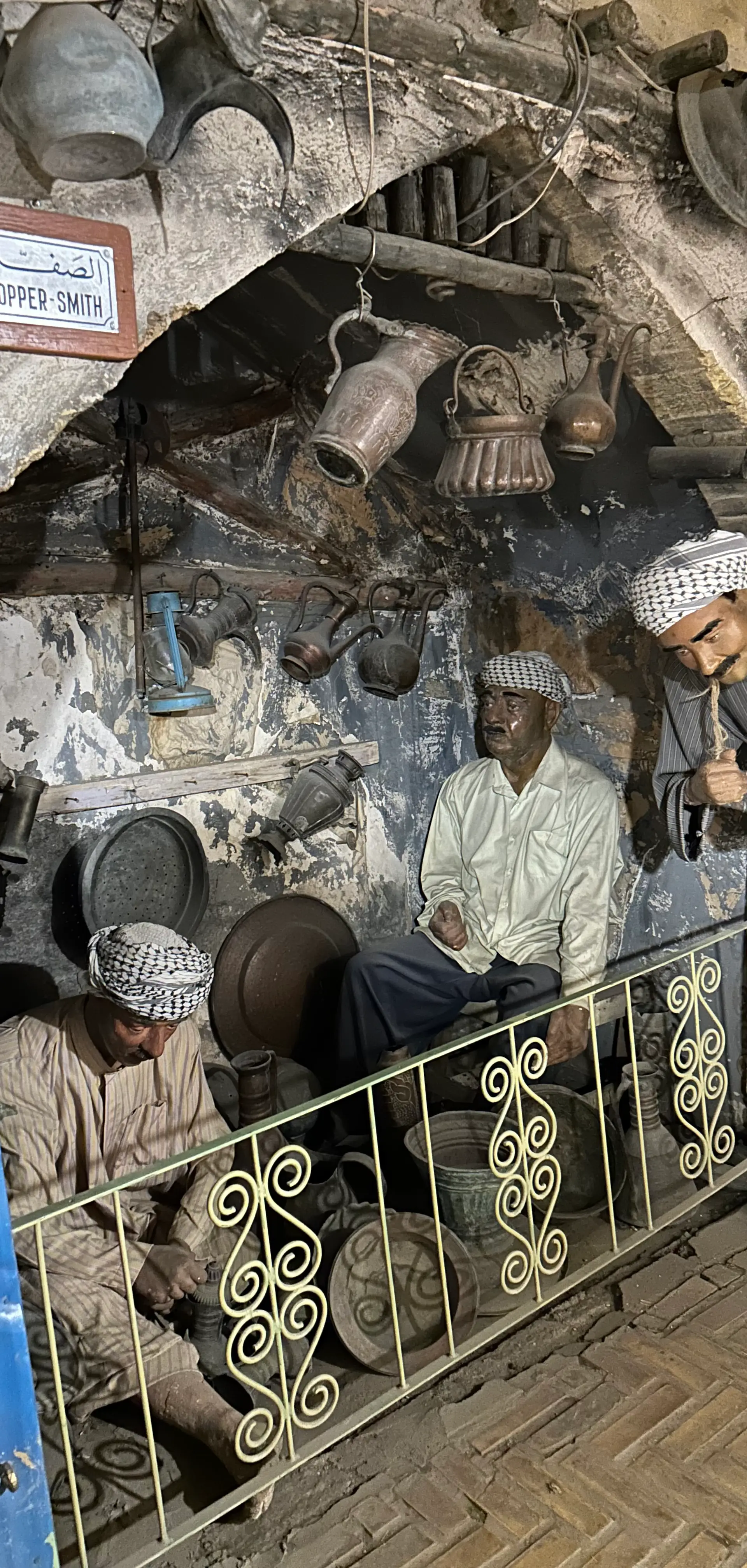
CopperSmith
Baghdadi Heritage Museum
Al Saffar the traditional copper craftsman is the skilled artisan who mastered the art of making and polishing copperware. It was one of the most vital professions in old Baghdad, serving daily household needs from kitchen utensils to decorative and ornamental pieces.
The name saffar comes from the word tasfir, meaning the act of polishing copper restoring its natural golden shine. This was done using special materials like ash and lemon to remove oxidation and bring back the bright, warm glow for which Baghdadi copper is known.
One of the most famous centers of this craft is Souq Al Safafeer in Baghdad, named after the abundance of copper craftsmen. The sound of hammers and engraving tools echoed through its alleys, creating a rhythm that balanced craft and artistry.
The saffar worked with different types of copper:
• Red copper for strong, durable cookware
• Yellow copper for decorative and ornamental pieces
Tools of the trade included the shakoosh (hammer) for shaping the copper sheets, maqshata (scraper), mibarrad (file) for smoothing, and engraving tools like chisels and stamps for carving intricate patterns.
The saffar was especially known for his mastery of hand engraving, adorning each piece with geometric Islamic designs, floral motifs, and Arabic calligraphy transforming simple items into unique works of heritage art.
Although this craft still exists today in Baghdad’s older markets, it faces serious challenges due to changing lifestyles and the rise of mass-produced alternatives. Its survival now depends on those who are willing to revive, support, and preserve this precious art from fading into the past.
CopperSmith
Arabic · English
Hear this stop narrated — free in the app
Get app