
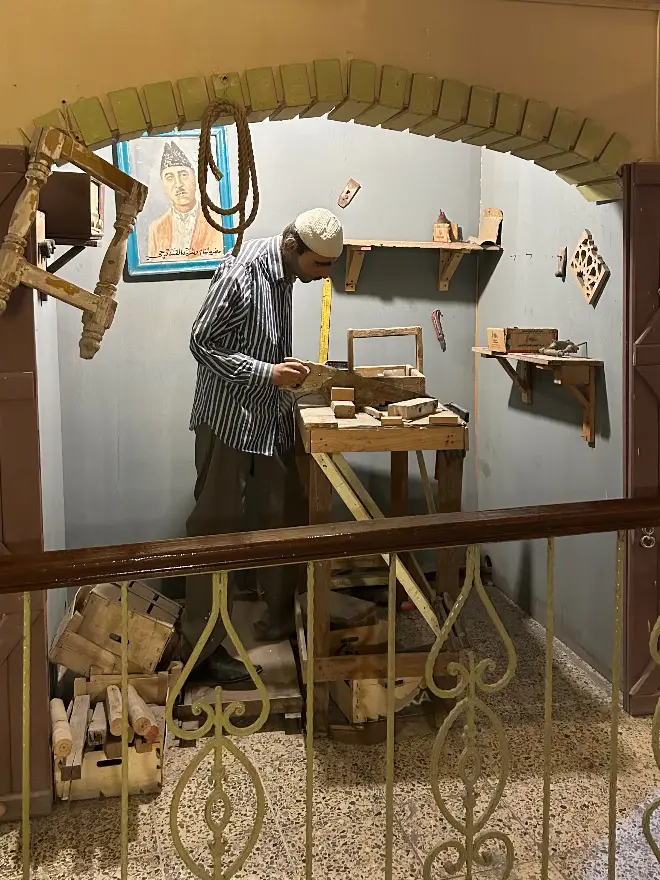
Carpenter
Baghdadi Heritage Museum
“Al Najjar” (carpenter) practiced the craft of making furniture, doors, windows, and all kinds of wooden tools using both local and imported woods. This profession was considered one of the most refined traditional crafts, requiring precision, skill, and patience.
The carpenter was not seen as a mere laborer, but as an artisan, a creative soul who could transform raw wood into both functional and beautiful objects. With his rough hands and endless patience, he built tables, beds, cabinets, and windows that adorned homes, mosques, and palaces.
People relied on him for every detail of the traditional Iraqi home from carved bedroom sets to ornate doors and his work also extended to religious buildings and public architecture. He served both humble families and wealthy patrons, crafting designs that reflected the tastes of every social class.
The carpenter used precise hand tools and inherited age-old techniques such as carving, texturing, inlay work, and wood joinery creating pieces that endured time and showcased intricate craftsmanship.
Despite the challenges posed by mass production and industrial furniture, the profession of the carpenter still survives in Baghdad and other Iraqi cities. In recent years, it has even seen moments of revival, thanks to a renewed appreciation for handmade and heritage-based crafts.
Carpenter
Arabic · English
Hear this stop narrated — free in the app
Get app