
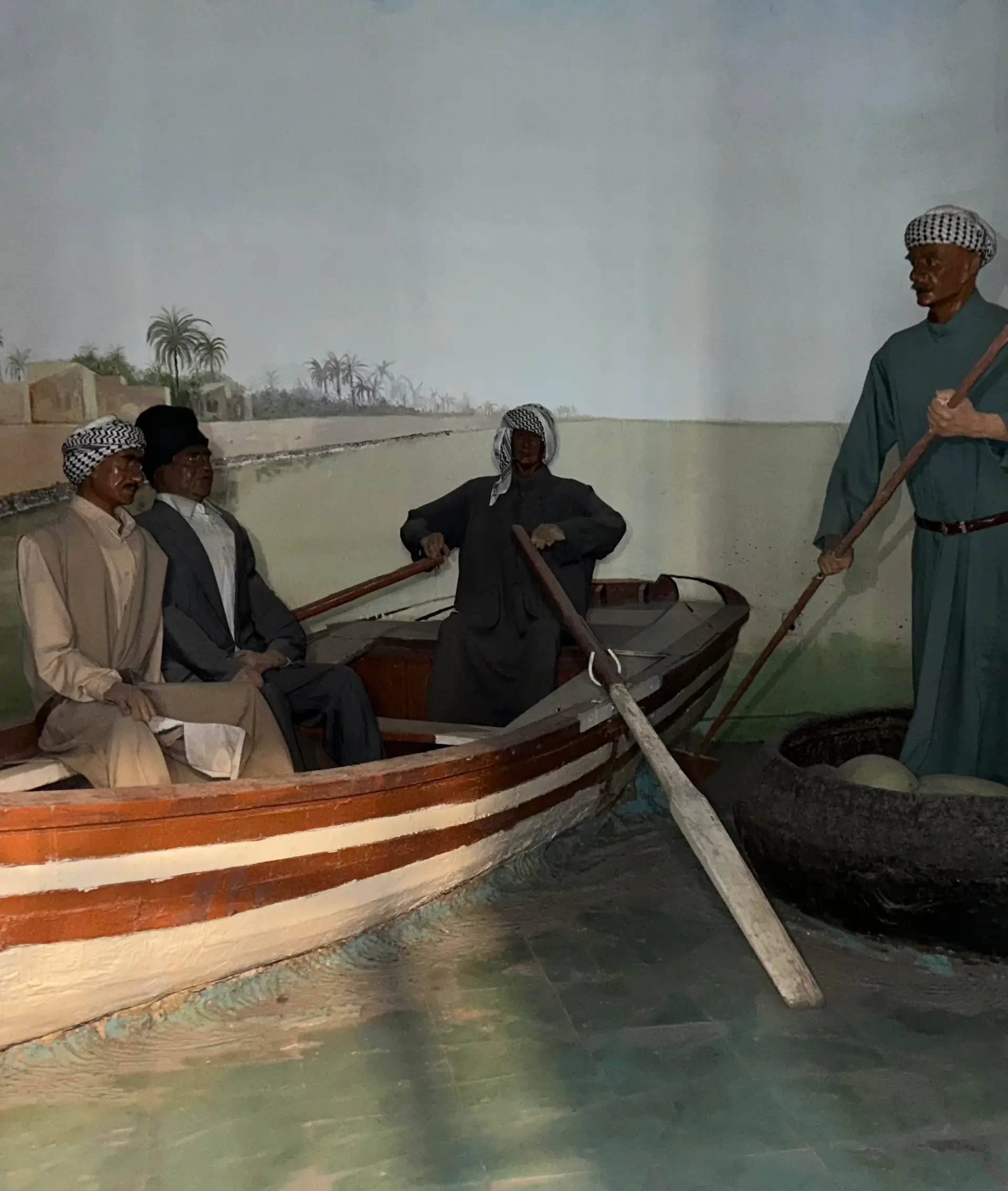
River Transport
Baghdadi Heritage Museum
Mesopotamia was renowned for its river transportation, thanks to the Tigris and Euphrates rivers running through its lands. These water-based modes of transport formed an essential part of daily life along the riverbanks, especially in the southern regions and the marshlands.
The balam is one of the traditional boats, usually made from teakwood or palm wood, and used for travel and fishing particularly in shallow and narrow waters. It is characterized by its slim rectangular shape and elevated prow, which gives it high maneuverability. The exterior is coated with qār (bitumen) to prevent water leakage and enhance durability.
Some sources suggest that the word balam is derived from Persian, meaning “small boat,” and it is widely used in Iraqi dialect. The balam has long served as a daily means of crossing between the riverbanks and is still used today in Baghdad, especially in areas near the Tigris River. Notably, some residents of the Shwākah neighborhood took up boat-making and fishing as trades, benefiting from their proximity to the river.
The quffa, on the other hand, is a simple watercraft that dates back to ancient times specifically to the civilizations of Mesopotamia, such as the Sumerians. It is a circular structure made of reeds, palm fronds, or rope, coated with bitumen on the outside to make it waterproof. The quffa was used to transport people and goods across rivers and represents an important aspect of folk innovation in how humans adapted to the riverine environment.
River Transport
Arabic · English
Hear this stop narrated — free in the app
Get app