
Circumcision
Baghdadi Heritage Museum
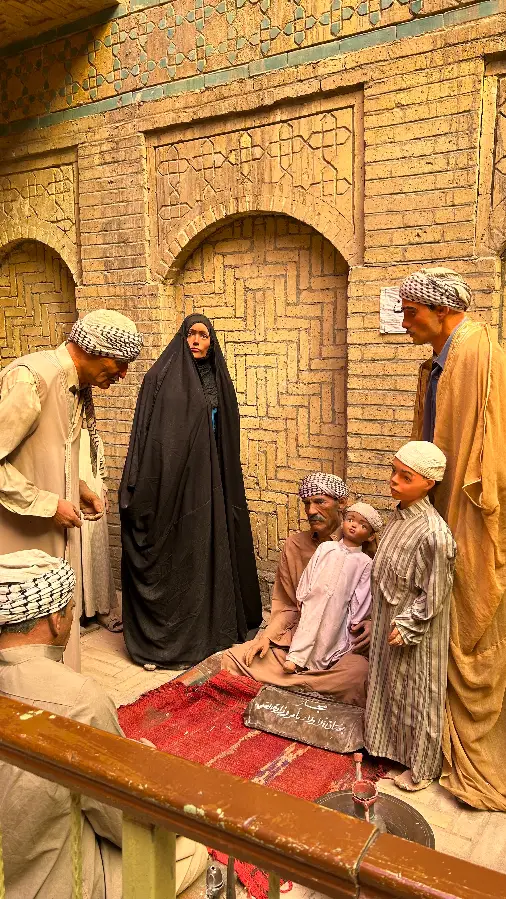
In old Baghdad, “tahour” circumcision was considered one of the major social occasions, carrying both ceremonial and festive significance. It was more than a medical procedure; it was a rite of passage symbolizing a boy’s transition from childhood into the early stages of manhood, within a framework of deep-rooted customs and traditions.
Families would prepare for this event well in advance, choosing a blessed day to hold it often during the months of “Rajab” or “Shaban”, or on festive holidays, due to the spiritual and communal joy associated with those times.
Invitations were extended to relatives and neighbors, banquets were held, and traditional sweets such as “zalabiya” and “baklava” were distributed all in a setting filled with joy and communal celebration.
The boy was dressed in luxurious new clothes, usually a white embroidered “jellabiya”, and his head adorned with a small turban. In some neighborhoods, he would be paraded on a decorated horse, led by a procession of relatives carrying incense and candles, while drums beat and folk songs were sung in celebration.
The circumcision itself was performed by a traditional barber or a local folk healer. The child would sit on the lap of a relative, and simple tools sterilized using traditional methods were used for the procedure.
This event served as a powerful moment of bonding and neighborly love, as family and community gathered around the boy in an atmosphere of support and happiness, reflecting the communal spirit that once defined Baghdadi life.
Though times have changed, the memory of "tahour" remains etched in the hearts of Iraqis a ritual embodying early manhood and social solidarity in traditional Baghdadi society.
Circumcision
Arabic · English
Hear this stop narrated — free in the app
Get app