
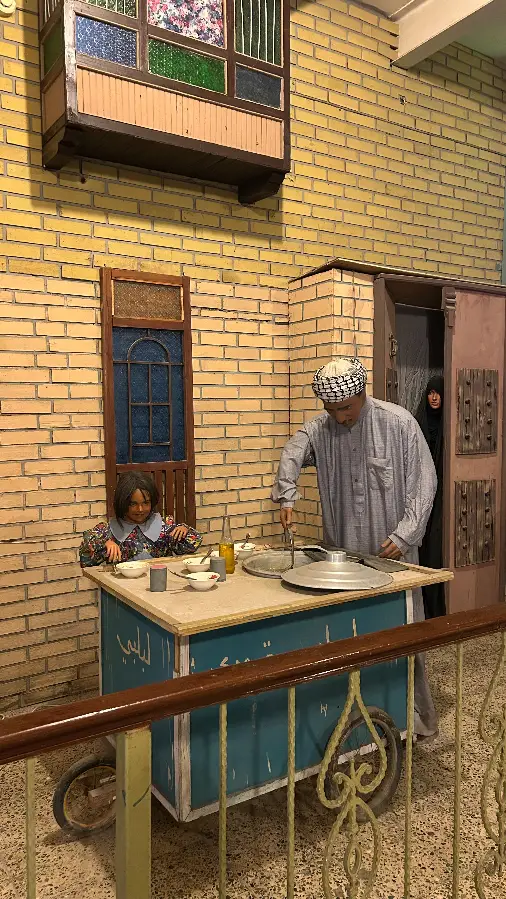
Lablabi Vender
Baghdadi Heritage Museum
“Abu Al Lablabi” is an unforgettable folk figure in the streets of Baghdad and many Iraqi cities, a wandering vendor pushing his distinctive cart, serving hot, comforting "lablabi” (boiled chickpeas) in a beloved traditional style. He roams through markets, cafes, and street corners, calling out in his familiar voice and attracting people of all ages especially on cold winter nights.
“Lablabi” is simply chickpeas boiled in salted, spiced water and served hot with cumin, chili, and salt, sometimes enhanced with lemon juice or vinegar for an added tang. Though a light dish, it is surprisingly filling and warming, making each stop at “Abu Al Lablabi”’s cart a moment for both nourishment and shared conversation.
Both young and old gather around him, enjoying their affordable, flavorful bowls while exchanging jokes and stories. Its low price made it a meal of the working class and the poor. But it’s “Abu Al Lablabi”’s generosity that defined him most often giving out extra portions for free, or handing warm bowls to poor children without charge, offering them a kind smile and a gentle, familiar phrase.
He was never just a vendor. He was a companion of the street, an entertainer, a teller of witty tales or sad folk songs, a spontaneous commentator on politics, or simply a warm listener to the everyday troubles of passersby. His character became immortalized in Iraqi songs and “mawwal”, remembered as a symbol of simplicity, kindness, and the people’s warmth.
Though the city has changed, and modern restaurants now dominate, “Abu Al Lablabi”’s carts still roam the alleys especially in winter preserving both the flavor and spirit of the past. He remains in the collective memory of Baghdadis as a symbol of a unique taste, a smiling face in the heart of the cold holding a ladle of chickpeas in one hand, and a dose of warmth in the other.
Lablabi Vender
Arabic · English
Hear this stop narrated — free in the app
Get app