
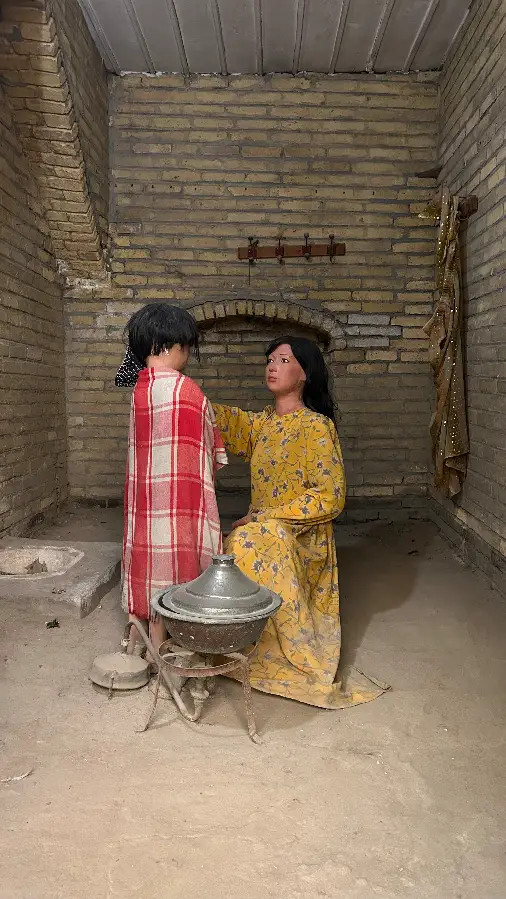
The House Bathroom
Baghdadi Heritage Museum
The home bath “Hammam” in old Baghdad was a fundamental element in house design combining simplicity with practicality, while ensuring privacy and comfort for all family members. It was not merely a place for bathing, but a part of daily culture, closely tied to cleanliness and family rituals.
The bath was typically built in a secluded corner of the interior courtyard "al hush", or at the end of a long hallway, and sometimes near the “sirdab” (basement), in order to maintain privacy.
Architecturally, the hammam featured walls made of yellow bricks, coated with plaster or adorned with blue tiles, giving it a clean and bright appearance. The floor was usually made of stone or brick, resistant to slipping and moisture. The ceiling was often domed or sloped, to facilitate ventilation and prevent steam buildup especially important during winter.
In the absence of modern heating systems, Baghdadis used traditional methods to store and heat water:
•Water was stored in large clay jars “hibb” to keep it cool.
•A metal bowl “tasa” was used to pour water during bathing.
•In winter, water was heated on a copper stove or portable brazier fueled by coal, and then transferred to the bath area.
•Some homes featured a primitive metal tank known as a dust, which was heated using coal or firewood.
Despite advances in construction and technology, this type of traditional bath still exists in some heritage districts and old Baghdadi neighborhoods standing as a testament to the artistry of folk architecture and the ingenuity of adapting to Baghdad’s harsh climate, both in summer and winter.
The House Bathroom
Arabic · English
Hear this stop narrated — free in the app
Get app