
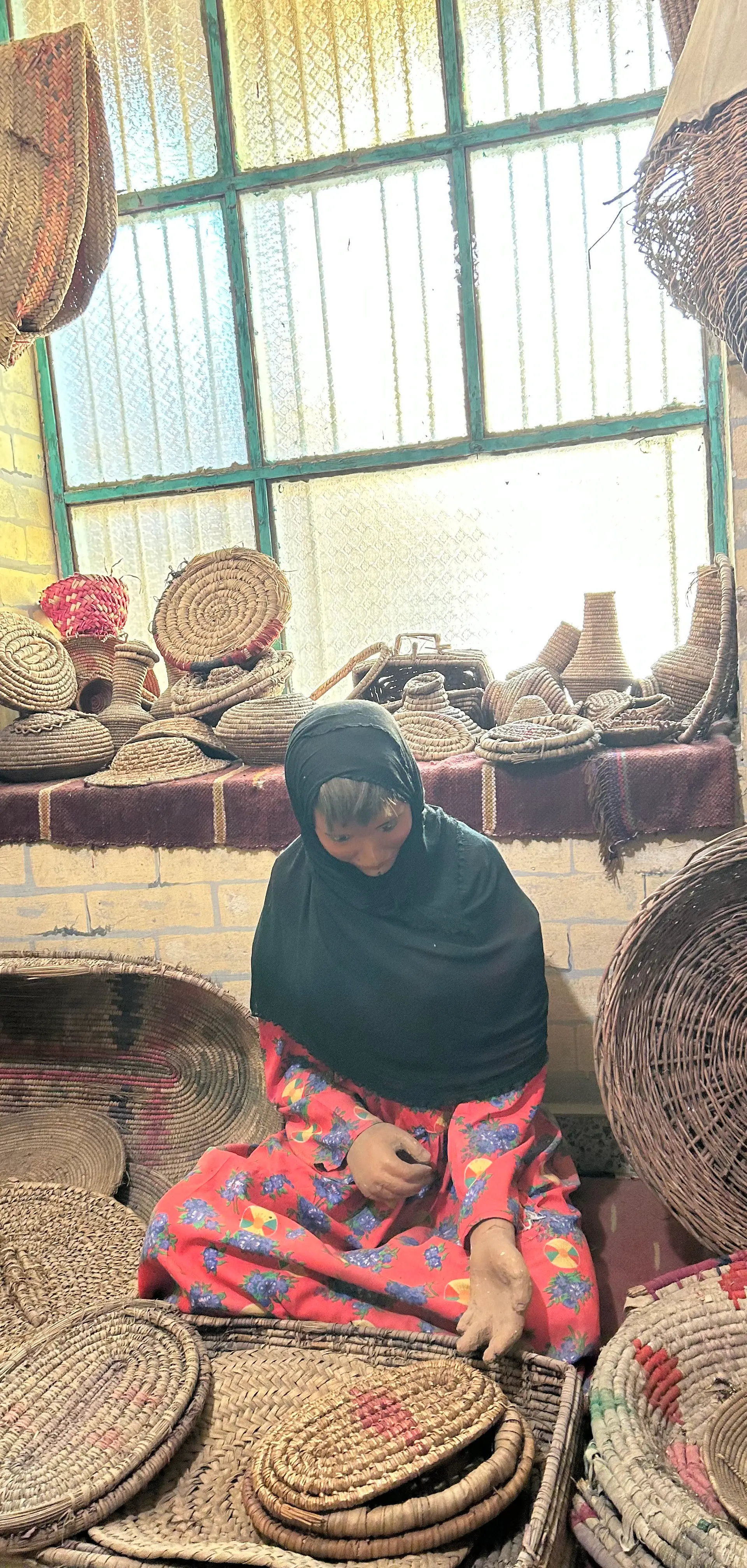
Wicker Seller
Baghdadi Heritage Museum
“Um Al Khous” was one of the most important traditional professions practiced by women in Iraq. It relied on making and selling handmade items crafted from “khous”, a natural palm material that was gathered and prepared to create everyday tools essential in Iraqi homes before the spread of modern goods.
“Um Al Khous” used to roam through narrow alleyways or sit in corners of heritage markets, laying out her carefully made products: the “meahfa” (hand fan), “quffa” (a woven container used for storage or dates), baskets for carrying fruits and vegetables, and “hasera” (woven mats) used for sitting or prayer. All of these were made with skill, patience, and fine aesthetic sense.
In a time when plastic and metal tools were absent, these palm-fiber products were a core part of every home blending usefulness with beauty, and showcasing the Iraqi woman’s talent in turning natural resources into functional and elegant items.
Though the craft has faded with the advance of industrial materials, “Um Al Khous” still exists though in limited numbers especially in rural areas and in markets focused on reviving heritage and traditional crafts.
In recent years, there’s been a renewed interest in this art form. New initiatives have emerged to support craftspeople, and dedicated exhibitions and markets have been created to showcase their products all in an effort to revive this beautiful craft and preserve it as part of authentic Iraqi identity.
Wicker Seller
Arabic · English
Hear this stop narrated — free in the app
Get app